Budget 2026: Energy Sector Poised for Major Focus as FM Sitharaman Presents Union Budget
All eyes are on the energy sector as Finance Minister Nirmala Sitharaman prepares to table the Union Budget 2026 tomorrow at 11 am. This will mark her ninth consecutive budget presentation, scheduled for February 1, with industry stakeholders expressing high expectations for continued support toward India's ambitious clean energy mission.
Building on Budget 2025's Renewable Energy Momentum
The upcoming budget follows a landmark year for renewable energy funding. In Budget 2025, the sector received a substantial boost with a 53% increase in allocation, demonstrating the government's commitment to sustainable energy development. This momentum is crucial as India progresses toward its Vikshit Bharat goals, with experts anticipating sustained support in the new fiscal plan.
How exactly did Budget 2025 transform the energy landscape? The finance minister allocated ₹22,600 crore specifically to renewable energy – representing a remarkable two-fold surge from the original budget estimates for FY25 and a significant 53% jump from revised estimates. The Ministry of New and Renewable Energy received ₹26,549.38 crore, marking a 53.48% increase compared to the previous year's revised estimates of ₹17,298.44 crore.

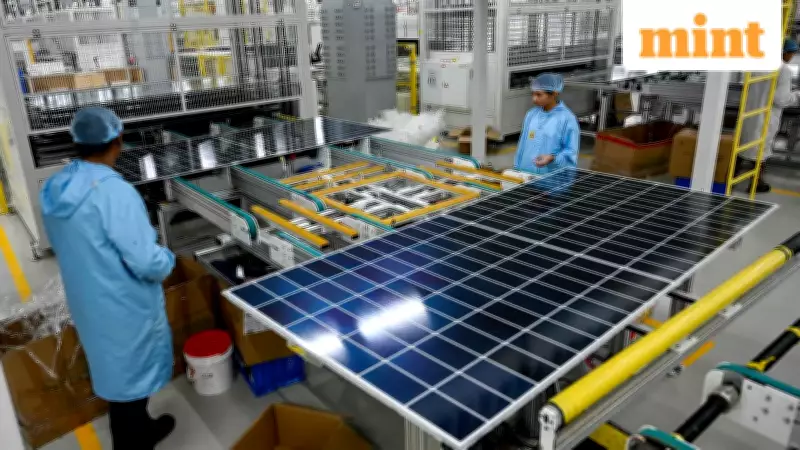
Within this allocation, the solar energy sector was prioritized with ₹24,224.36 crore directed toward critical projects including solar power grid infrastructure and the Kisan Urja Suraksha evam Utthaan Mahabhiyan (KUSUM) initiative. Additionally, the Nuclear Energy Mission, which targets 100 GW capacity by 2047, secured ₹20,000 crore for various developmental projects.
Industry Expectations for Budget 2026: Policy Support and Infrastructure
Industry leaders have outlined specific priorities for the upcoming budget, emphasizing the need for regulatory frameworks that accelerate India's renewable energy growth. According to Shyam Sunder Jindal, promoter at BC Jindal Group, Budget 2026 should focus on policies that support clean power generation at scale.
"In the upcoming Budget 2026, favourable regulations and policies that enable the seamless deployment of large-scale battery storage infrastructure and solutions alongside renewable projects are expected to guide the industry's expansion," Jindal stated. "We are observing the commissioning of large-scale initiatives that focus on deploying solar rooftop infrastructure, and therefore, interventions that support project financing and address supply-chain bottlenecks will aid growth at scale."
Kaushik Tanti, chief operating officer at Replus, highlighted the importance of expanding the Viability Gap Funding framework for battery storage systems to ensure large-scale grid storage and renewable integration. "With FAME II concluding, a successor EV incentive framework is essential to sustain adoption, especially in mass-market segments," Tanti noted. "Overall, continued focus on clean, reliable, and affordable energy will be critical to achieving India's long-term energy and climate goals."
Green Hydrogen and Self-Reliant Energy Ecosystem
Vivek Bhatia, MD and CEO of TKIL Industries and Chairman CII Mining and Construction Equipment Division, identified green hydrogen, biofuels, and biochemicals as strategic opportunities for Budget 2026. "Investing aggressively in these sectors will build upon our existing robust manufacturing ecosystem, reduce our dependence on crude imports and further enhance our 'Green Economy' taking us and the world faster toward 'Net Zero'," Bhatia explained. "As a nation we have a unique opportunity to build global leadership positions in each of these sectors unhindered by geopolitical challenges we face in AI, EVs and other tightly controlled global sectors."
Anurag Choudhary, CMD and CEO at Himadri Specialty Chemical Limited, emphasized the need for proactive measures. "I expect Budget 2026 to be proactive, building upon previous allocations and strengthening support across these areas to enable a self-reliant, competitive, and sustainable clean energy ecosystem in line with the vision of Atmanirbhar Bharat," Choudhary said.

Grid Modernization and Fiscal Incentives
Saurabh Kumar, vice president (India) at Global Energy Alliance for People and Planet, pointed to grid modernization as a key area for budgetary support. "Higher budgetary support for renewables, tax and GST rationalization for Battery Energy Storage Systems (BESS) are critical to improve project viability and attract private investment," Kumar stated. "Extension of PM-KUSUM scheme to more states will further accelerate agri-solarization. We also hope that incentives for utility-led models for rooftop solar adoption will promote revenue generation for DISCOMS and encourage adoption by low-income households."
As Finance Minister Nirmala Sitharaman presents Union Budget 2026 tomorrow, the energy sector stands at a pivotal juncture. With expectations ranging from enhanced storage infrastructure to green hydrogen development, the budget's provisions will significantly influence India's trajectory toward energy independence and climate objectives.