

Budget 2026 Focus: MoRTH's Road Infrastructure Funding Skyrockets
As national attention shifts towards the upcoming Budget 2026, the Ministry of Road Transport and Highways (MoRTH) has solidified its position as one of the government's most consistently supported infrastructure arms. Over the past five years, budgetary allocations for roadways have experienced a sharp and sustained upward trajectory, reflecting the sector's strategic importance in India's development agenda.
Steep Rise in Financial Allocations
The financial backing for the road transport sector has witnessed an extraordinary surge, with allocations nearly tripling since the fiscal year 2021. The journey of this remarkable growth began with Rs 99,159 crore in FY21, which then increased to Rs 1,23,551 crore in FY22. The following year saw a substantial jump to Rs 2,17,089 crore in FY23. This upward momentum continued robustly, reaching Rs 2,75,986 crore in FY24 and Rs 2,80,519 crore in FY25 (Revised Estimates). For the forthcoming fiscal year, Budget Estimates have placed the outlay at an impressive Rs 2,87,333 crore, firmly establishing roads as a central pillar of capital expenditure-led economic growth.
Transformation of India's Highway Network
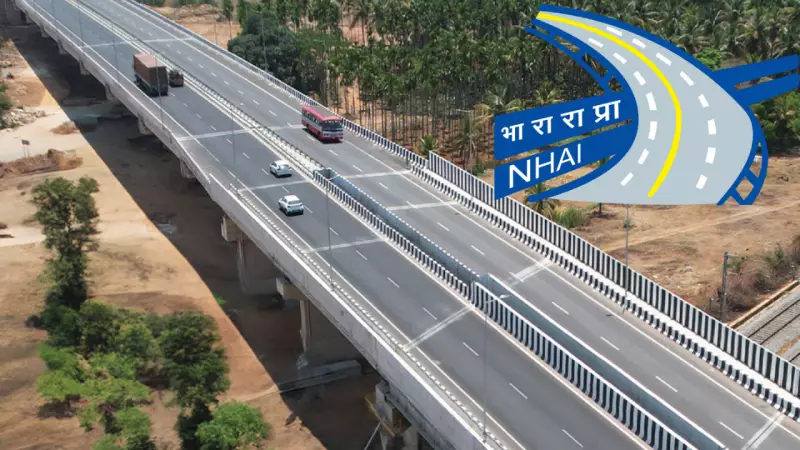
This substantial funding push has directly coincided with a rapid and transformative expansion of India's national highway network. Over the past decade, the network has grown by approximately 61%, now spanning an extensive 1,46,560 kilometers. The focus has evolved beyond merely increasing length to significantly enhancing quality, marked by a notable surge in access-controlled expressways and four-lane-and-above highways. Operational high-speed corridors and expressways have expanded dramatically, while wider highways now constitute a much larger proportion of the overall network, improving connectivity and safety across the country.

Future Projects and Monetisation Strategies
Looking ahead, MoRTH has meticulously lined up an ambitious pipeline of projects to be developed under the public-private partnership (PPP) model over the next three years. This pipeline encompasses 13,400 kilometers of roadways, involving an estimated investment of Rs 8.3 lakh crore. Parallel to this, asset monetisation remains a key strategic focus, with highways being systematically bundled under innovative models such as Toll-Operate-Transfer and Infrastructure Investment Trust (InvIT) structures. The proposed Raajmarg InvIT is particularly noteworthy, as it is expected to bring operational stretches to the market, thereby unlocking fresh capital for further infrastructure development.
Persistent Challenges and Budget Expectations
Despite these advancements, several challenges continue to weigh on execution. These include slower project approvals, complex land acquisition requirements—notably the norm of having 80% land in hand before work commences—quality concerns, cost overruns, and contractual disputes. Against this backdrop, expectations from Budget 2026 are multifaceted. Stakeholders anticipate the introduction of faster approval mechanisms through an umbrella framework, sustained capital expenditure commitments, and a clearer, more detailed roadmap for monetisation to streamline processes and accelerate project completion.
The road transport sector's journey from FY21 to the anticipated Budget 2026 highlights a consistent governmental emphasis on infrastructure as a catalyst for economic growth. With strategic funding, innovative partnerships, and a focus on quality, MoRTH is poised to play a pivotal role in shaping India's transportation landscape in the coming years.






