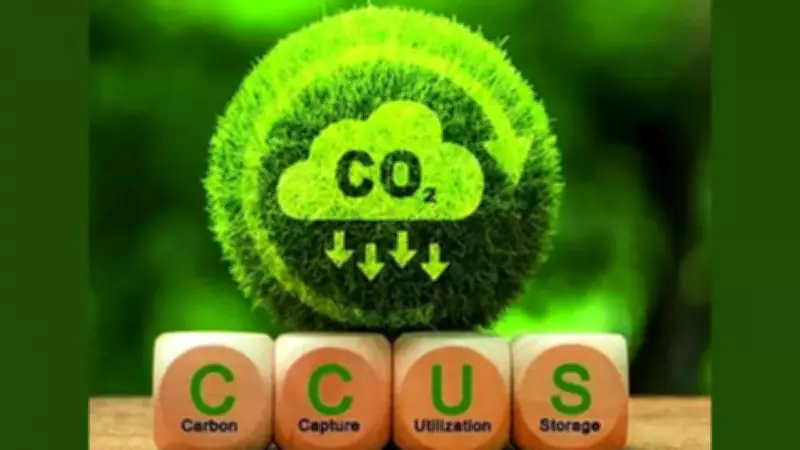
Budget 2026 Proposes Massive Rs 20,000 Crore Outlay for Carbon Capture Technology
In a significant move aimed at balancing environmental sustainability with economic competitiveness, the Union Budget presented on Sunday has proposed a substantial allocation of Rs 20,000 crore for scaling up Carbon Capture, Utilisation and Storage (CCUS) facilities. This initiative marks a major push for decarbonisation efforts over the next five years, specifically designed to help high-emission Indian industries stay competitive in export markets while addressing climate concerns.
Addressing EU Carbon Border Tax Risks
The timing of this budgetary allocation is crucial, as it comes when Indian industries face potential risks from the European Union's impending carbon border tax. This tax could impact exports from sectors with high carbon footprints, making the adoption of CCUS technologies not just an environmental imperative but also an economic necessity.
Finance Minister Outlines CCUS Roadmap
Referring to the decarbonisation roadmap launched in December 2025, Finance Minister Nirmala Sitharaman emphasized that CCUS technologies will achieve "higher readiness levels in end-use applications" across five key industrial sectors:

- Power
- Steel
- Cement
- Refineries
- Chemicals
To kickstart this ambitious plan, the government has allocated Rs 500 crore for the 2026-27 fiscal year specifically for the CCUS scheme under the power ministry.
Aligning with India's Net Zero by 2070 Target
The substantial budgetary push for decarbonisation through CCUS is perfectly aligned with India's long-term climate commitment of achieving 'net zero' emissions by 2070. This technology is widely recognized as a critical tool that can help the country meet its emission reduction targets without compromising on its development goals and industrial growth.
Understanding CCUS Technology Components
The Carbon Capture, Utilisation and Storage technology comprises two main components with distinct functions:
- Storage Component: This involves processes that separate carbon dioxide (CO2) generated by energy or industrial applications. The captured CO2 is then compressed, transported, and injected into depleted oil reservoirs or suitable geological structures for permanent storage.
- Utilisation Mechanism: This approach directly uses the captured CO2 as an input or feedstock for the production of various industrial and consumer goods, bypassing the need for long-term storage processes.
This comprehensive budgetary initiative represents a strategic investment in India's green industrial future, positioning the country's export sectors to remain competitive in increasingly carbon-conscious global markets while advancing its climate commitments.