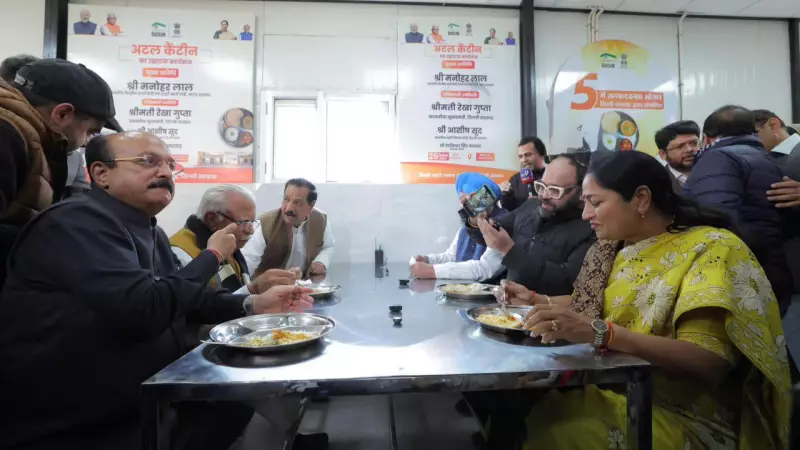
In a significant move to bolster food security, the Delhi government on Thursday launched the Atal canteen scheme, opening 45 subsidised food outlets across the national capital. The initiative, which provides a hearty, nutritious meal for just five rupees, was rolled out on the 101st birth anniversary of former Prime Minister Atal Bihari Vajpayee.
Inauguration and Strategic Rollout
The scheme was formally inaugurated at a canteen near Apna Bazaar in Nehru Nagar, Lajpat Nagar. The event was attended by Union Minister Manohar Lal Khattar, Delhi Chief Minister Rekha Gupta, and Urban Development Minister Ashish Sood. In a symbolic gesture, CM Gupta travelled via the Delhi Metro from Delhi Gate to Lajpat Nagar to attend the event, engaging with commuters to promote public transport.
The government has announced an ambitious plan to scale up the total number of Atal canteens from 45 to 100 within the next 15 to 20 days. Officials stated that the initial 45 canteens have been strategically positioned in areas with high footfall of target beneficiaries. These include industrial zones, JJ clusters (jhuggi-jhopri settlements), migrant relief camps, and densely populated neighbourhoods to ensure maximum reach to low-income groups.

Locations, Timings, and Nutritional Value
The 45 inaugurated canteens are spread across numerous Delhi localities. Key locations include Narela, Bawana, Jahangirpuri, Mangolpuri, Rajouri Garden, Dwarka, Sangam Vihar, RK Puram, and Shahdara, among others. Each canteen will operate two meal services daily: lunch from 11:30 AM to 2:00 PM and dinner from 6:30 PM to 9:00 PM.
The standard meal plate, weighing approximately 600 grams, is designed to offer balanced nutrition. It includes roti, dal or pulses, seasonal vegetables, rice, and pickle. This combination delivers an estimated 700 to 800 calories and 20 to 25 grams of protein per meal, addressing basic dietary needs effectively.
Funding, Operations, and Quality Control
The Delhi government has allocated a substantial Rs 104.24 crore for the Atal canteen project. Each outlet is projected to serve around 1,000 meals every day, which would cumulatively provide affordable food access to over one lakh (100,000) people daily across the city once all 100 canteens are functional.
Operations have been entrusted to 11 agencies selected through a transparent tender process. These canteens are equipped with modern kitchens featuring LPG-based cooking systems, RO water purification plants, digital token systems for orderly service, and CCTV surveillance for safety and monitoring.
To ensure consistent quality and safety, food samples will undergo regular testing by laboratories accredited by the Food Safety and Standards Authority of India (FSSAI) and the National Accreditation Board for Testing and Calibration Laboratories (NABL).
Political Reactions and Project Vision
The launch did not go without political commentary. The opposition Congress party criticised the scheme, arguing that subsidised meals cannot be a substitute for employment generation and sustainable livelihood creation. The Delhi government, however, defended the initiative, stating that the wide geographic spread of the canteens marks a crucial step in strengthening the city's food security framework and providing immediate relief to vulnerable populations.
The Atal canteen scheme stands as a major welfare project, aiming to combat hunger and malnutrition by making wholesome food accessible at a symbolic price, honouring the legacy of the late Prime Minister Atal Bihari Vajpayee.