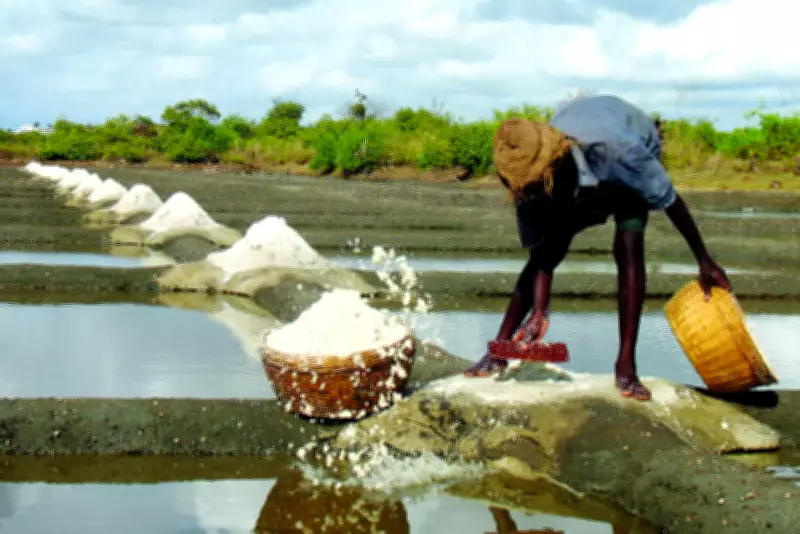
Goa Government Launches Rs 95 Lakh Initiative to Rescue Traditional Salt Farming
In a significant move to preserve a fading cultural and economic heritage, the Goa government has approved a comprehensive financial assistance package totalling Rs 95 lakh under the newly introduced Salt Pan Conservation, Support and Revival Scheme. This initiative, effective from the 2025–26 fiscal year, aims to reverse the decades-long decline of salt farming along the state's estuarine belts, a livelihood once thriving but now threatened by urbanisation, labour shortages, salinity changes, and insufficient institutional backing.
Direct Financial Relief for Salt Farmers
The scheme allocates Rs 75 lakh in direct financial aid to support traditional salt pan cultivators. This amount is designated for 75 eligible salt farmers, each of whom will receive Rs 1 lakh as financial assistance. This direct injection of funds is intended to provide immediate relief and incentivise the continuation of this age-old practice, which has been steadily losing ground due to economic pressures and environmental challenges.
Establishment of a Dedicated Support Unit
To ensure the effective implementation and long-term success of the revival efforts, the government has sanctioned Rs 10 lakh for the salaries of a newly created salt pan support unit. This unit will be staffed with specialised personnel, including:

- One scientific officer
- Two scientific assistants (covering North and South Goa)
- One accountant
- One multi-tasking staff member
An additional Rs 10 lakh has been allocated for office and administrative expenses. This funding will cover essential items and activities such as laptops, field logistics, monitoring systems, documentation, awareness material creation, and field visits, ensuring the unit operates efficiently and remains connected to on-ground realities.
Comprehensive Activities and Technical Support
The scheme outlines a broad range of permissible activities designed to address multiple facets of salt pan revival. Key focus areas include:
- Farmer Support and Technical Assistance: Activities such as farmer hand-holding, field-level technical aid, demonstrations, and expert advisory services to improve farming practices.
- Capacity Building: Programmes focused on traditional bund techniques, water management strategies, and the development of salt-based livelihoods to enhance skills and sustainability.
- Exposure and Learning: Organising exposure visits and peer-learning programmes both within and outside the state to foster knowledge exchange and innovation.
Special emphasis is placed on the restoration of degraded salt pans. This includes critical tasks like bund strengthening, canal cleaning, drainage maintenance, and water flow restoration, which are essential for reviving the ecological and operational health of the pans.
Integration of Technology and Research
Recognising the importance of modern tools in agricultural revival, the government has permitted expenditure on IT systems, GIS mapping, digital platforms, mobile applications, farmer databases, and monitoring dashboards. These technologies will aid in better planning, tracking progress, and engaging with farmers.
Furthermore, the scheme supports activities related to research, quality assessment, certification, innovation, and the promotion of climate-resilient salt farming practices. Detailed project reports, baseline surveys, hydrological assessments, and feasibility studies can also be undertaken to strengthen planning and ensure the long-term sustainability of salt pan revival efforts.
Stringent Financial and Audit Conditions
To ensure transparency and accountability, the government has laid down rigorous financial and audit conditions. The scheme accounts must be maintained separately by the Goa State Biodiversity Board and will be subject to audit by a government auditor upon completion of the programme. Additionally, the Comptroller and Auditor General of India may conduct test checks at its discretion.

Any misutilisation of funds, whether by implementing agencies or beneficiaries, will result in the recovery of the full amount and may lead to disqualification from future assistance. Unspent funds must be returned to the government treasury by March 31, 2026, ensuring that resources are utilised effectively within the designated timeframe.
This holistic approach by the Goa government represents a crucial step towards revitalising a traditional industry, supporting local livelihoods, and preserving an integral part of the state's cultural and environmental heritage.