Budget 2026: The Enduring Tradition of Halwa Ceremony and Lock-In Period
As India prepares for the Union Budget 2026-27 presentation on February 1, 2026, a unique tradition dating back over four decades continues to mark the commencement of this crucial financial process. The Halwa Ceremony, held on January 27 this year at North Block's Budget Press, symbolizes both celebration and secrecy in the budget preparation journey.
What is the Halwa Ceremony?
The Halwa Ceremony represents a significant tradition followed by the Finance Ministry, where a special ceremony is organized several days before the Union Budget presentation in Parliament. This event officially marks the beginning of the budget printing process, taking place in the basement of North Block in Central Delhi, which houses a dedicated printing facility for this purpose.
The Ceremony Proceedings
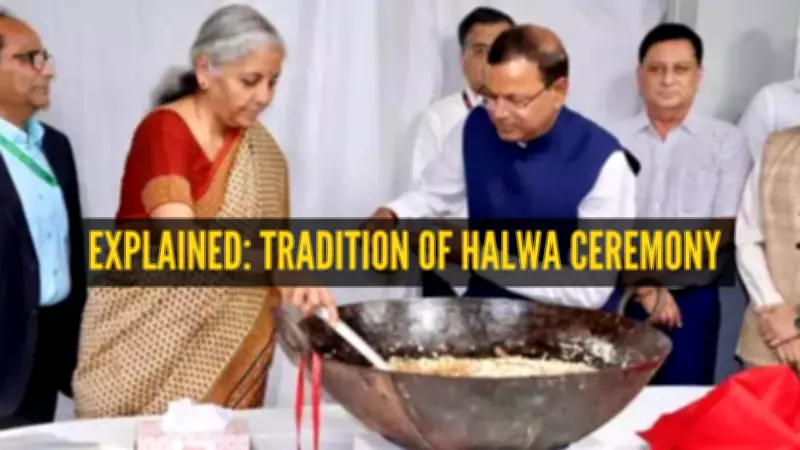
During this traditional event, halwa – the beloved Indian sweet dish – is prepared in a large iron kadhai and served by the finance minister to all participating ministers, officials, and staff members. The ceremony formally commences when the finance minister personally stirs the kadhai containing the sweet preparation.

This year's ceremony witnessed the presence of Union Minister for Finance and Corporate Affairs, Nirmala Sitharaman, along with Union Minister of State for Finance, Pankaj Chaudhary. The finance minister was accompanied by secretaries from all departments under the Ministry of Finance and other senior officers involved in budget preparation. As part of the ceremony, Minister Sitharaman conducted a tour of the Budget Press, reviewed preparation activities, and extended her best wishes to the entire budget team.
Significance of the Lock-In Period
The Halwa Ceremony initiates what is known as the 'lock-in' period, a crucial phase designed to prevent budget information from leaking into the market before its official presentation in Parliament. To maintain absolute secrecy, the North Block basement transforms into a secure fortress for approximately 9-10 days following the ceremony.
This period serves as a kind of 'send-off' for Finance Ministry officials and staff involved in preparing the government's annual financial statement. During lock-in, these individuals remain within the North Block basement, completely isolated from the outside world to ensure the confidentiality of the final budget document.
Officials involved in budget preparation or printing are kept in complete isolation, with no contact permitted with the outside world, including their own families. In emergency situations, family members may leave messages on a designated number, but direct communication remains strictly prohibited throughout this period.
Evolution of Budget Printing and Digital Transformation
The North Block basement has housed a printing press that traditionally printed budget documents for forty years, from 1980 to 2020. However, significant changes have occurred in recent years with the digitalization of budget processes.
Previously, budget documents were printed at Rashtrapati Bhavan until 1950, when the operation shifted to Minto Road following document leaks, and eventually moved to North Block in 1980.
The transition to digital distribution has substantially reduced the lock-in period from what previously lasted up to two weeks to just five days currently. According to the Press Information Bureau, all Union Budget documents – including the Annual Financial Statement (commonly called Budget), Demand for Grants, and Finance Bill – will be available on the "Union Budget Mobile App" following the finance minister's budget speech in Parliament.
Cultural and Symbolic Importance
While the Narendra Modi government has modified several traditional budget aspects since 2014, the Halwa Ceremony has endured as a cherished tradition. This practice reflects the cultural significance of consuming something sweet before undertaking important work, while also serving as a gesture of gratitude toward officers and staff who work tirelessly for months to prepare the budget that shapes India's economic direction for the coming financial year.
Traditional Halwa Recipe
For those interested in preparing this symbolic sweet dish, here is the traditional recipe:
Ingredients:

- 1 cup sooji (semolina)
- 1 cup sugar
- 1 cup ghee
- 2 cups water
- 1 tablespoon cardamom powder
Method:
- Heat ghee in a kadhai and add sooji, cooking until the color changes
- Prepare sugar syrup using water and sugar, adding cardamom powder
- Transfer the syrup to the cooked sooji, stirring well
- Cook until the ghee separates from the mixture
- Garnish with nuts before serving
This enduring tradition continues to bridge India's rich administrative heritage with modern governance practices, maintaining both ceremonial significance and practical security measures in the crucial budget preparation process.