Haryana's Direct Land Purchase Policy for Gurugram Metro: An In-Depth Look
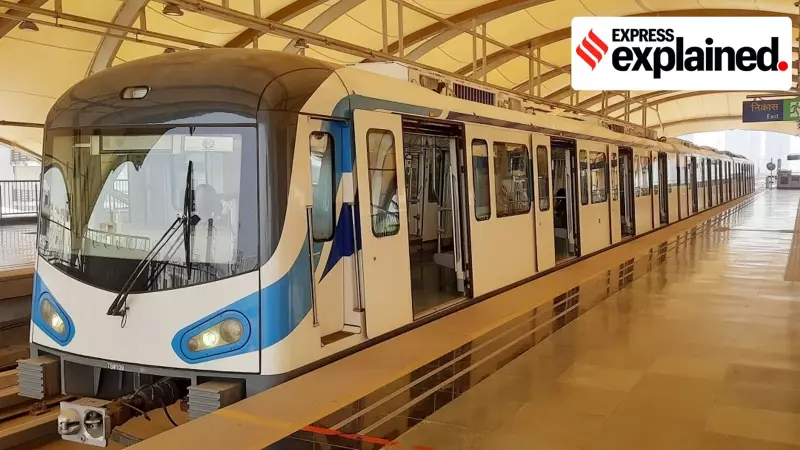
The Haryana government has recently notified the Policy for Direct Purchase of Private Land/Property through Mutual Negotiations for the upcoming Gurugram Metro projects. This policy aims to streamline land acquisition for the Millennium City Centre-Cyber City metro corridor, which is being implemented by Gurugram Metro Rail Limited (GMRL), a joint venture between the Government of India and the Government of Haryana.
Background and Objectives
The official notification highlights that Gurugram's Comprehensive Mobility Plan (CMP) envisages nearly 200 km of mass transport network by 2041. While most of the planned metro corridor passes through government land, certain sections require private land acquisition or property demolition. The primary objective of this policy is to ensure the timely commissioning of the metro project by creating a faster mechanism to address critical cases of private land requirements that could delay the project.
Key Features of the Direct Land Purchase Policy
The policy introduces an alternative route for land acquisition, focusing on negotiated settlements rather than compulsory acquisition under the Right to Fair Compensation and Transparency in Land Acquisition, Rehabilitation and Resettlement Act (RFCTLARR), 2013. Key features include:

- Land acquisition through mutual negotiations instead of compulsory processes.
- Formation of a high-level Land Purchase Committee (LPC) chaired by the Deputy Commissioner of Gurugram.
- Compensation calculated strictly as per Sections 26 to 30 and Schedule I of the RFCTLARR Act, 2013.
- An additional incentive of 25% paid over the calculated compensation.
- Inclusion of all compensation and rehabilitation and resettlement (R&R) benefits for titleholders.
- Provision for compulsory acquisition under the RFCTLARR Act if negotiations fail.
Land Identification and Notification Process
The policy mandates that only the minimum required land should be identified. The Chief Project Manager (CPM) of GMRL must identify critical land parcels and obtain in-principle approval from the Managing Director of GMRL. A formal requisition is then sent to the Deputy Commissioner, followed by a joint inspection involving revenue, engineering, irrigation, Public Works Department (PWD), and GMRL officials to measure and map the land. Ownership verification is conducted through revenue records.
Once land parcels are identified, the Land Acquisition Officer issues a general notice in newspapers for wide publicity, providing a 30-day notice period for landowners to raise objections regarding interest and ownership.
Compensation Calculation and Incentives
Compensation under the policy is calculated using the RFCTLARR Act framework. The market value is determined as the highest of stamp duty value, average sale price of similar land, or consented compensation amount. Additional components include:
- Value of buildings, immovable assets, trees, and crops calculated by competent engineers.
- A solatium of 100% added to the market value.
- 12% per annum interest from notification to award.
- The defining feature is the 25% incentive over the calculated compensation, which includes R&R benefits, offering landowners a higher lump-sum amount in exchange for voluntary participation.
Negotiation Process and Landowner Participation
After the notice period, the Land Acquisition Officer informs interested landowners for negotiations. The Land Purchase Committee conducts these negotiations, with proceedings jointly signed by both parties. If an agreement is reached, it is recorded in Form B, where landowners undertake not to claim higher compensation in any court or forum, ensuring finality and avoiding future litigation. Upon agreement, GMRL transfers the negotiated amount to the Deputy Commissioner, who makes an award and facilitates payment through electronic transfer.

Implications and Potential Concerns
While the policy aims to balance infrastructure urgency with landowner rights through financial incentives and negotiated consent, it could spark debate among landowners and rights activists. The implicit pressure created by the threat of compulsory acquisition under the RFCTLARR Act if landowners refuse to sell raises concerns about voluntary participation. Officials emphasize that the policy is meant for exceptional and critical land parcels, not large-scale acquisition, and attempts to overcome procedural delays without discarding the safeguards of the RFCTLARR Act.
Comparison with the RFCTLARR Act, 2013
The key difference lies in the method: the Direct Purchase policy relies on negotiations and mutual consent, whereas the RFCTLARR Act involves compulsory acquisition with statutory timelines. However, compensation under the new policy is anchored entirely in RFCTLARR provisions, with an added incentive for cooperation. This approach offers landowners higher compensation in exchange for speed and certainty, while preserving the legal fallback of the 2013 Act.
In summary, Haryana's Direct Land Purchase policy represents a strategic move to expedite the Gurugram Metro project by facilitating faster land acquisition through negotiated settlements, backed by enhanced compensation and a clear framework for handling objections and refusals.