Cabinet Approves Extension of Jal Jeevan Mission to 2028 with Enhanced Funding
The Union Cabinet, chaired by Prime Minister Narendra Modi, has given its approval for the extension of the Jal Jeevan Mission (JJM) until December 2028. This decision comes with a revised total outlay of Rs 8.69 lakh crore, marking a significant shift from infrastructure creation to a service delivery–driven model under the new JJM 2.0 framework.
Increased Central Financial Support
Under the revised framework, the Centre's financial support has been increased to Rs 3.59 lakh crore, up from the Rs 2.08 lakh crore approved in 2019-20. This implies an additional central share of Rs 1.51 lakh crore, aimed at bolstering the mission's objectives.
Focus on Governance and Service Delivery
The government stated that the restructured mission will prioritize drinking water governance, institutional systems, and sustainable service delivery. This move represents a departure from the earlier infrastructure-centric approach, emphasizing long-term sustainability and efficiency.

Introduction of Digital Framework and Community Initiatives
As part of the reforms, a national digital framework named Sujalam Bharat will be introduced. This system will assign each village a unique Sujal Gaon/Service Area ID, digitally mapping the entire drinking water supply network from source to household tap.
The programme will also launch Jal Arpan, involving Gram Panchayats and Village Water and Sanitation Committees in the commissioning and formal handover of water supply schemes to enhance transparency and accountability. A Gram Panchayat will declare itself Har Ghar Jal only after certifying that adequate in-village operation and maintenance mechanisms are in place.
To strengthen community ownership, the mission will promote Jal Utsav, an annual community-led review and maintenance event designed to reinforce collective responsibility for sustainable drinking water management.
Progress and Impact of the Mission
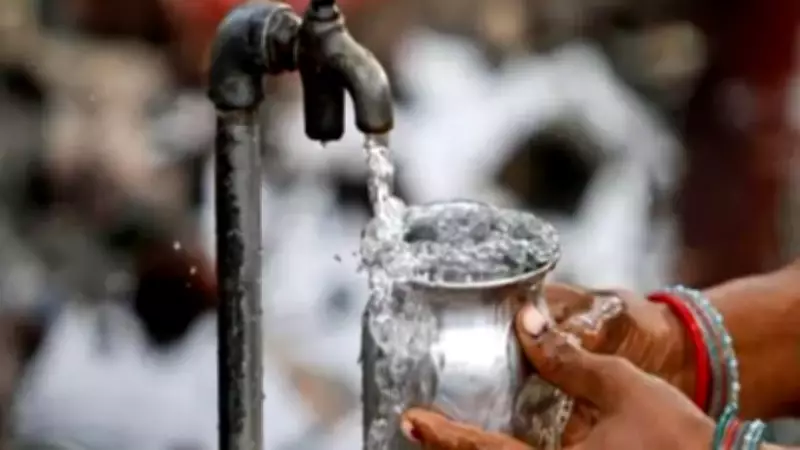
Since its launch in 2019, the Jal Jeevan Mission has made substantial progress. From a baseline of 3.23 crore rural households (17%) with tap water connections in 2019, more than 12.56 crore additional rural households have received tap water connections under the mission.
Currently, 15.80 crore out of 19.36 crore rural households in the country—approximately 81.61%—have tap water connections, according to official data.
Wider Socio-Economic Benefits
Several independent studies have highlighted the broader impact of the programme:
- SBI Research estimated that the mission has freed about 9 crore women from the burden of fetching water, enabling them to participate in other economic activities.
- The World Health Organisation (WHO) estimated that improved water access has helped save 5.5 crore hours of women's labour daily, prevented around 4 lakh diarrhoeal deaths, and resulted in savings of 14 million disability-adjusted life years (DALYs).
- Nobel laureate Prof Michael Kremer suggested the programme could contribute to a 30% reduction in under-five mortality, potentially saving about 1.36 lakh lives annually.
- Studies by IIM Bangalore and the International Labour Organisation (ILO) estimated that the mission could generate 59.9 lakh direct and 2.2 crore indirect person-years of employment, boosting rural livelihoods.
Future Goals and Alignment with National Vision
Under JJM 2.0, the government aims to ensure tap water connections for all 19.36 crore rural households by December 2028, while strengthening sustainability, community participation, and citizen-centric water services.
The programme is aligned with the broader Viksit Bharat @2047 vision, which seeks to move towards assured 24×7 rural drinking water supply through structural reforms and a utility-style service delivery framework.
The mission will adopt a whole-of-government approach, with multiple ministries and departments collaborating to ensure long-term operation, maintenance, and source sustainability of rural water supply systems.