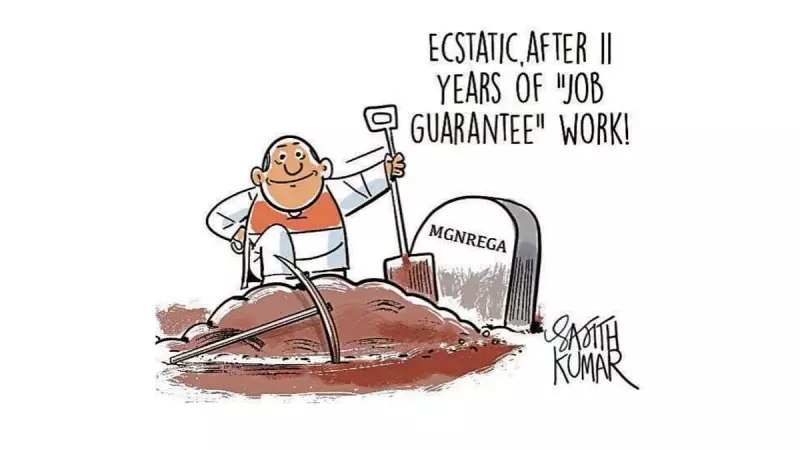
A recent political cartoon published by Deccan Herald has powerfully encapsulated the growing crisis surrounding the Mahatma Gandhi National Rural Employment Guarantee Act (MGNREGA). The illustration serves as a stark visual critique of the funding delays and administrative hurdles plaguing the flagship rural job guarantee scheme, which is a vital lifeline for millions of India's rural poor.
The Cartoon's Stark Message on Rural Employment
The cartoon, a regular feature in the publication's opinion section, uses symbolic imagery to convey deep-seated anxieties. It typically depicts the plight of rural workers dependent on MGNREGA, facing an uncertain future due to inadequate fund allocation and persistent delays in wage payments. The visual narrative often contrasts the scheme's legal promises with the ground reality of empty coffers and administrative paralysis, pointing a finger at systemic failures.
By personifying the scheme or its beneficiaries in distress, the artist underscores the human cost of policy bottlenecks. The drawing acts as a mirror to reports of workers across states waiting for months to receive their rightful wages, undermining the very essence of the act which guarantees 100 days of work per household.

Roots of the Crisis: Funding and Implementation Gaps
The cartoon's critique is rooted in verifiable facts and ongoing debates. Analysts and activists have repeatedly flagged that the union government's budgetary allocations for MGNREGA have often fallen short of the actual demand, especially following the economic distress caused by the pandemic. This leads to states exhausting their funds mid-financial year, resulting in a freeze on new work and accumulation of pending wage liabilities.
Furthermore, the implementation is marred by technical glitches in the digital attendance and payment system, coupled with allegations of inflated muster rolls and corruption at local levels. The cartoon simplifies these complex, layered issues into an immediate, emotionally resonant image that resonates with the public and policymakers alike.
Broader Implications for Rural India and Policy
The significance of this cartoon extends beyond mere commentary. It amplifies a critical national conversation about social security and rural economic stability. MGNREGA is not just an employment program; it is a safety net that supports agricultural livelihoods during lean seasons and builds rural infrastructure. Disruptions in its smooth operation directly impact household income, asset creation, and overall rural demand in the economy.
The visual satire puts pressure on the administration by highlighting the contradiction between the scheme's celebrated status as a world's largest public works program and the recurring crises it faces. It calls for urgent corrective measures: timely fund releases, streamlining of payment processes, and a genuine assessment of the workforce's needs.
In conclusion, the Deccan Herald cartoon on MGNREGA is more than a piece of editorial art. It is a potent form of journalism that holds power accountable. By focusing on the human element of the funding crisis, it reminds the nation that behind the dry statistics of budgetary documents are millions of families whose survival and dignity are tied to the timely execution of this promise. The enduring power of such cartoons lies in their ability to spark dialogue and, ideally, catalyze action to strengthen this crucial pillar of rural India's economy.