As India prepares for the transition from the Mahatma Gandhi National Rural Employment Guarantee Act (MGNREGA) to the new VB-G RAM G scheme, a crucial and honest evaluation of the legacy programme's two-decade journey is imperative. The original impulse behind MGNREGA celebrated a spirit of inclusive development, but its operational machinery now requires significant repairs. Experts argue that failing to acknowledge both its triumphs and its systemic cracks will haunt not only the present scheme but also its proposed successor.
The Dual Legacy of MGNREGA: Safety Net and Wage Growth
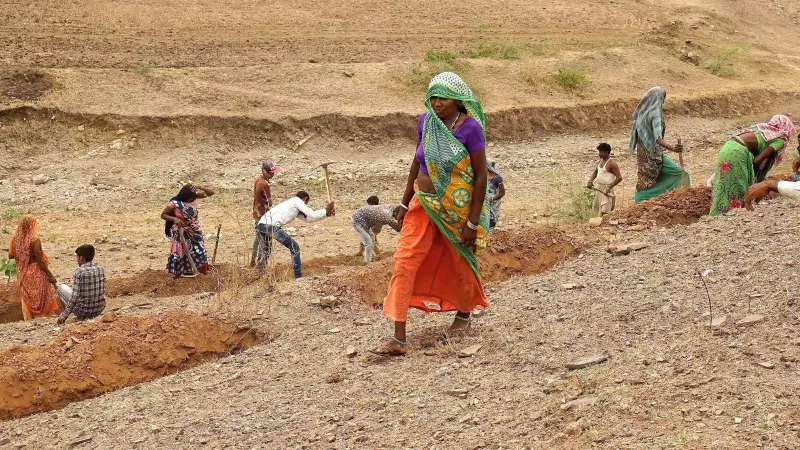
MGNREGA's foundational success was its principle of universal access through self-targeting, which effectively reduced local bottlenecks and gatekeeping by elites. By offering manual work regardless of a household's economic status, it created a vital safety net. The scheme has been particularly impactful for women and older Indians who face barriers in the traditional job market. Furthermore, numerous studies credit MGNREGA with applying upward pressure on rural wages across the country, a significant achievement in poverty alleviation.
The Cracks in the Edifice: Stark Inter-State Inequality
Despite its noble intent, the scheme developed deep fissures over the years, most visibly in the growing inequality of implementation between states. Data reveals a stark contrast: in 2023-24, Kerala provided 11.3 days of work per rural resident, a substantial increase from 3.6 days in 2011-12. In stark contrast, Uttar Pradesh (UP), with a significantly poorer rural population, stagnated at a mere 1.9 days of work in 2023-24, up only marginally from 1.7 days in 2011-12. This disparity is alarming given that UP's monthly per capita expenditure (Rs 3,481) is nearly half that of Kerala's (Rs 6,611), suggesting the universal scheme became less inclusive of the poorest.

The roots of this inequality are multifaceted. A chronic problem has been consistent underfunding by successive governments, both UPA and NDA. To fully fund the legal guarantee of 100 days of work at the lowest wage rate would require over Rs 2,10,000 crore for wages alone. However, central allocations, barring the pandemic years, never exceeded Rs 86,000 crore. This funding shortfall, especially acute in the latter half of the fiscal year, led to delayed payments for materials, forcing states to advance their own resources—a task easier for fiscally stronger states.
State-level governance efficiency also played a decisive role. Kerala demonstrated effective management by spreading work evenly through the year, while in UP, nearly 40% of the annual MGNREGA workdays were exhausted in the first quarter. The integration of MGNREGA with other infrastructure schemes also had unintended consequences. While it helped fund labour, it sometimes created pressure on district officials to use MGNREGA in prosperous districts where local wages were higher than scheme wages, leading to potential misuse.
VB-G RAM G: Will Targeting Solve the Core Problems?
The proposed VB-G RAM G scheme seeks to move away from a universal entitlement to a targeted benefit system based on normative allocation, aiming to direct more funds to poorer states and districts. While this could theoretically address inter-state disparity, it introduces a new set of challenges. The most significant shift is the change in the Centre-state funding ratio from 90:10 to 60:40 for most states. For economically weaker states already struggling with administrative capacity and shrinking fiscal space, finding their 40% share could be a prohibitive hurdle, potentially exacerbating the very inequalities the new design aims to fix.
The central challenge, as highlighted by Professor Sonalde Desai of NCAER and the University of Maryland, is to conduct a clear-eyed assessment. The question is not just about which scheme is better on paper, but which features of MGNREGA have stood the test of time and which require recalibration. The right to employment is a powerful concept, but it demands a wholehearted commitment of resources. An unfunded mandate inevitably distorts the original intent, rendering it a right in name only—one that often ends up excluding the very poor it was meant to protect.

The transition to VB-G RAM G presents an opportunity to learn from MGNREGA's legacy. Success will depend on an honest diagnosis of past failures, particularly in funding and federal cooperation, to ensure the next chapter in India's rural employment story does not repeat the same mistakes.