

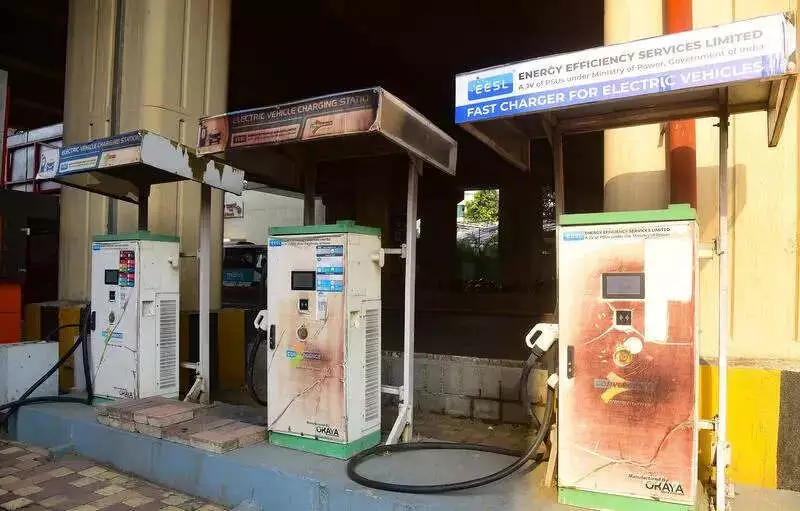
MSRTC Mandates EV Charging Infrastructure at All New Fuel Outlets on Corporation Land
In a significant policy shift towards sustainable transportation, the Maharashtra State Road Transport Corporation (MSRTC) has made electric vehicle (EV) charging stations a compulsory requirement for all new retail fuel outlets being developed on its land. This directive was announced by MSRTC chairman and state transport minister Pratap Sarnaik following a crucial board meeting held on Tuesday.
Strategic Move Towards Cleaner Mobility
The new mandate applies specifically to fuel stations being established under the public-private partnership (PPP) model on MSRTC-owned properties across Maharashtra. During the meeting conducted in the minister's chamber at the state transport ministry, officials were explicitly instructed to prioritize the development of robust EV charging infrastructure capable of supporting not just private electric vehicles but also electric buses in the future.
This decision marks a deliberate acceleration of Maharashtra's transition towards cleaner mobility solutions, even as the corporation continues to operate predominantly diesel-powered buses in its current fleet. The meeting saw participation from MSRTC managing director Madhav Kusekar, senior corporation officials, and representatives from multiple fuel companies operating in the state.

Aligning with India's Development Vision
Minister Sarnaik contextualized this initiative within India's broader developmental aspirations, emphasizing that the transportation sector must undergo what he termed a "green revolution" as the nation progresses toward its goal of becoming a developed country by 2047.
"Future travel will fundamentally rely on electric energy, and the State Transport Corporation is fully committed to building the necessary infrastructure for this transition starting immediately," Sarnaik declared. He stressed that creating adequate charging facilities represents the foundational step in preparing Maharashtra's transportation network for an electric future.
Phased Transition for MSRTC Fleet
Currently, approximately 90% of MSRTC's extensive bus fleet continues to operate on conventional diesel fuel. However, the corporation has initiated planning for a systematic, phased transition toward electric buses. Future procurement decisions will prioritize electric buses, and the simultaneous development of charging infrastructure at fuel outlets is designed to ensure that the necessary ecosystem evolves in parallel with fleet modernization efforts.
The strategic emphasis on charging stations at conventional fuel outlets creates dual-purpose facilities that can serve both existing vehicles and future electric transportation needs, thereby smoothing the transition period.
Expansion of Land Monetization Strategy
In a related development that expands MSRTC's revenue generation approach, Sarnaik also announced the launch of over 250 new retail fuel pumps on corporation-owned land assets throughout Maharashtra. These facilities are conceptualized as multi-energy stations that will offer:
- Traditional diesel fuel where applicable
- Compressed Natural Gas (CNG) options
- Comprehensive EV charging infrastructure
This integrated approach enables commuters and private vehicle users to access multiple energy options at single locations, creating convenience while supporting the gradual shift toward electric mobility. The initiative represents a sophisticated land monetization strategy that simultaneously addresses current transportation needs while future-proofing infrastructure investments.
The combined announcements signal Maharashtra's determined push toward sustainable transportation, with MSRTC playing a pivotal role in creating the physical infrastructure necessary to support widespread electric vehicle adoption across the state's road networks.






