

NASA Satellite Data Uncovers Dramatic Shift in North India's Nighttime Illumination
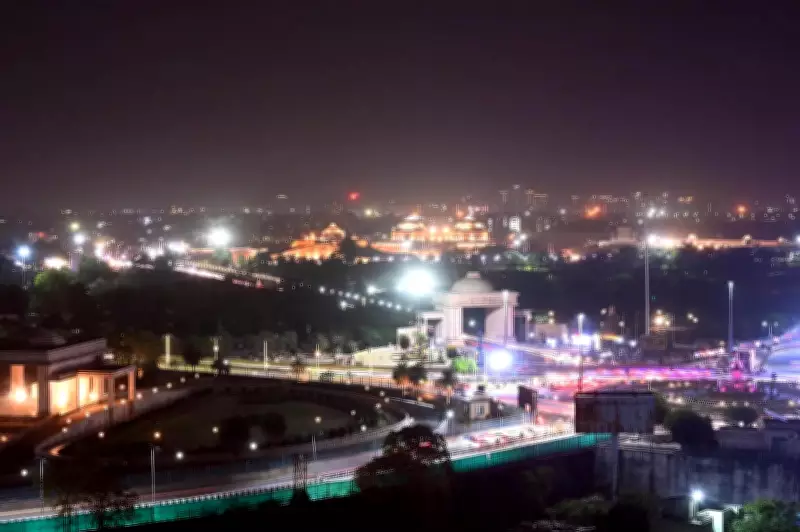
A groundbreaking study leveraging NASA satellite imagery from 2014 to 2022 has uncovered how national rural electrification drives and streetlighting initiatives have fundamentally reshaped nighttime illumination patterns across north India, with Uttar Pradesh and Bihar experiencing particularly significant transformations over the past decade.
Advanced Algorithm Reveals Dynamic Nighttime Changes
Conducted by a team of 22 scientists led by Tian Li and Zhe Zhu from the University of Connecticut, the research analyzed an impressive 1.16 million nighttime satellite images. Utilizing a newly developed algorithm capable of detecting daily fluctuations in artificial light, the study moves beyond traditional yearly averages to capture rapid brightening and dimming events, painting a far more volatile picture of global nighttime activity.
Published as the cover article in the prestigious journal Nature under the title "Satellite imagery reveals increasing volatility in human night-time activity," the findings underscore clear regional disparities within India.

Contrasting Illumination Trends: South vs. North India
Southern India demonstrated sustained and continuous brightening throughout the nine-year period, a trend attributed to steady urbanization, robust industrial activity, and higher economic development levels. In stark contrast, northern India exhibited a distinct trajectory: a pronounced surge in illumination during the early years of the decade, followed by more variable patterns later on.
Researchers attribute this initial burst of brightness in the north largely to policy-driven interventions. Large-scale national rural electrification initiatives successfully expanded power access to millions of villages, while government-backed streetlighting programs rapidly installed outdoor lighting along rural roads and in small towns.
"Areas that had remained dark for decades were suddenly visible from space," the study notes, highlighting how electricity connections and public lighting transformed nighttime activity across vast swathes of northern India.
Policy Impact and Infrastructure Development
The authors emphasized that "non-residential development and electrification are major drivers of abrupt increases in nighttime light," citing India as a prime example of how infrastructure policy can swiftly alter illumination patterns. Unlike the gradual process of urban expansion, these targeted programs produced sharp, detectable changes over short periods, especially in rural and semi-urban regions.
In response to the findings, Uttar Pradesh Energy Minister AK Sharma, in a written statement, detailed the state's progress under Chief Minister Yogi Adityanath. "Under CM Yogi Adityanath, over the past few years, the state government has focused on policy, management, and technological reforms aimed at providing uninterrupted electricity from rural areas to major cities. The impact of which is now visible globally," he stated.
Sharma reported that approximately 1.5 lakh hamlets have been electrified in the last decade. Uttar Pradesh's power generation capacity surged from 5,820 MW in 2022 to 9,120 MW currently, nearly doubling. Electricity availability increased to 15,395 MW in 2022, with the state now providing 27,000 MW.
To enhance power efficiency, the state has replaced 1.65 lakh kilometers of old power cables and around 30 lakh electricity poles. "Given major reforms under CM Yogi Adityanath's directives, the state is able to provide electricity for 18 to 24 hours to every village, town, and district," he added.
Global Context: Brightening in Asia, Dimming in Europe
Globally, the study found that India and China contributed the largest share of increased nighttime brightness, closely linked to urban growth and expanding energy access. Simultaneously, the maps reveal a parallel trend of dimming in parts of Europe, where energy-efficient LEDs, light pollution regulations, and conservation measures have reduced overall illumination.

France experienced a 33% drop in nighttime brightness, followed by the United Kingdom at 22% and the Netherlands at 21%. European nights dimmed especially sharply in 2022 during the regional energy crisis triggered by the Russia-Ukraine conflict, as governments and cities curtailed lighting to conserve power.
This comprehensive analysis not only highlights the transformative power of policy-driven electrification in India but also underscores the volatile nature of human activity as observed from space, offering valuable insights for future infrastructure planning and energy management worldwide.





