

NCRTC Sees 25% Budget Reduction in Union Budget 2026-27 as RRTS Project Nears Completion
In a significant development, the Union Budget for the fiscal year 2026-27 has allocated Rs 2,200 crore to the National Capital Region Transport Corporation (NCRTC), marking a substantial decrease of approximately 25% from the previous year's allocation of Rs 2,918 crore. This budgetary adjustment comes as work on the flagship Delhi-Meerut Namo Bharat Regional Rapid Transit System (RRTS) corridor approaches its final stages.
Detailed Breakdown of Expenditure Categories
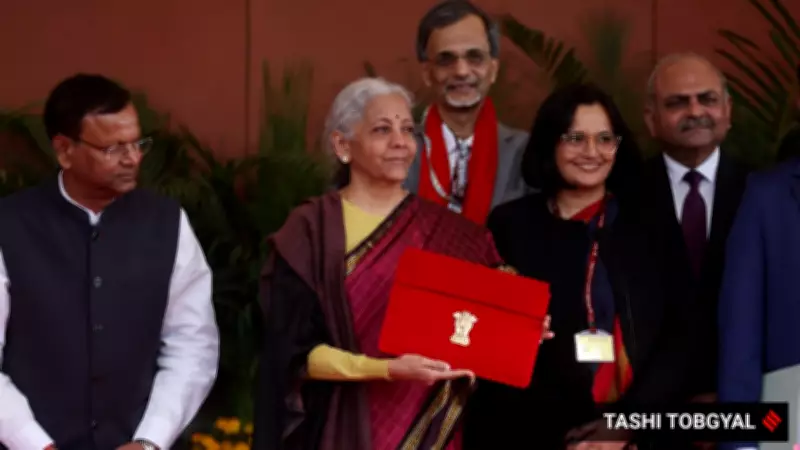
Finance Minister Nirmala Sitharaman, while presenting the budget on Sunday, specified that out of the total allocation, Rs 1,324 crore has been earmarked under revenue expenditure, while Rs 876 crore is designated for capital expenditure on the project. This strategic allocation aims to facilitate the commencement of work on new corridors as and when they receive official sanction from the central government.
An official from NCRTC commented, "These allocations would give the push for work to start on new corridors as and when they get sanctioned." This statement underscores the agency's readiness to embark on future expansions once the necessary approvals are in place.

Current Project Status and Future Corridors
Notably, the latest budgetary allocation exceeds the agency's expenditure for the current fiscal year, which stands at Rs 2,000 crore with only two months remaining. A closer examination reveals that nearly all unspent funds were under the capital head—of the Rs 2,471 crore sanctioned, the agency managed to spend only Rs 1,528 crore.
The NCRTC is currently awaiting clearance from the Centre for the remaining two corridors of Phase I of the RRTS project: the Delhi to Karnal corridor in Haryana and a segment of the Delhi to Alwar corridor. Both projects are reportedly at advanced stages of consideration by the central authorities.
At present, a 55-kilometer section of the 82-kilometer Delhi-Meerut corridor, stretching from New Ashok Nagar in Delhi to Meerut South in Uttar Pradesh, is fully operational. The entire corridor has undergone successful trial runs and is expected to become fully operational in the near future, according to officials.
Convergence and Timeline for Future Projects
All three planned corridors are designed to converge at the Sarai Kale Khan Namo Bharat station in the capital. Once sanctioned, the remaining two projects are estimated to take at least five to six years for completion, highlighting the long-term vision for regional connectivity.
Economic and Environmental Impact of RRTS
The recently released 2025-26 Economic Survey of India has praised the RRTS project for its significant contributions to pollution mitigation and labour market benefits. The survey highlighted that since partial operations began, an estimated 25 lakh vehicle trips have been avoided, offsetting approximately 69 lakh kilograms of CO2 emissions. Furthermore, there is a roadmap to source 60% of the project's energy from renewable sources.
In terms of employment generation, the construction of the project alone created roughly 166 lakh mandays between 2019 and 2025. Operations are expected to support around 12 lakh mandays annually. Early accessibility estimates suggest substantial gains in jobs reachable within one hour—nearly 6.9–7.6 lakh for Meerut and about one lakh for Sarai Kale Khan.
Future Expansion and Regional Growth
The Economic Survey also pointed out the identification of nearly 2,900 kilometers of potential Namo Bharat RRTS corridors across various regional clusters. These include corridors such as Bengaluru–Mysuru–Tumakuru–Hosur, Chennai–Vellore–Villupuram–Chengalpattu, and Hyderabad–Warangal, among others. These expansions are envisioned to act as engines of growth, fostering economic development and enhanced connectivity across these regions.
This budgetary adjustment reflects a strategic shift as the initial RRTS corridor nears completion, with funds now being directed towards future expansions and sustainability initiatives. The reduction in allocation is aligned with the project's progress and the government's focus on efficient resource utilization while planning for the next phase of regional transport development.






