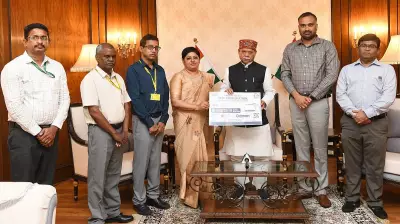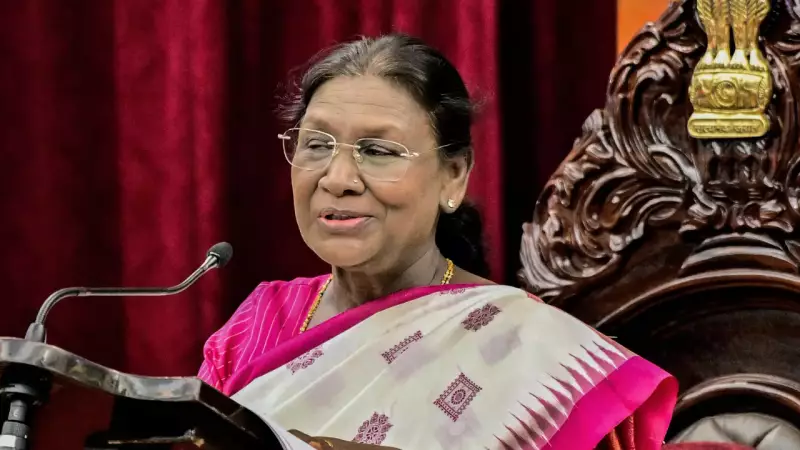
In a significant policy shift, President Droupadi Murmu on Sunday granted her assent to a new legislation that overhauls India's flagship rural employment scheme. The Viksit Bharat—Guarantee for Rozgar and Ajeevika Mission (Gramin) (VB—G RAM G) Bill, 2025 has now formally become law, replacing the two-decade-old Mahatma Gandhi National Rural Employment Guarantee Act (MGNREGA).
A New Statutory Framework for Rural Employment
The core provision of the new law establishes a statutory guarantee of 125 days of wage employment in a financial year to every rural household. This guarantee applies specifically to households whose adult members volunteer to undertake unskilled manual work. According to an official statement released following the presidential assent, the legislation is designed to create a modern statutory framework that aligns with the broader national vision of Viksit Bharat 2047.
The move marks the end of an era for MGNREGA, which was enacted in 2005 and had become one of the world's largest social welfare programmes, guaranteeing 100 days of employment. The new bill increases the guaranteed days by 25, aiming to provide more sustained livelihood support in rural areas.

Passage Amidst Parliamentary Turmoil
The legislative journey of the VB-G RAM G Bill was marked by high drama and fierce opposition. The Lok Sabha passed the bill on Thursday, but not before sustained protests from opposition parties led to repeated disruptions and the eventual adjournment of the House.
Opposition members strongly criticized the government's decision to repeal and rename MGNREGA. A prominent voice of dissent was Trinamool Congress MP Mahua Moitra, who launched a sharp attack on the government's move. She accused the ruling dispensation of undermining Mahatma Gandhi's legacy and argued that the bill was “destroying the idea of Ram Rajya both in letter and spirit by repealing MGNREGA and renaming the scheme.”
Implications and the Road Ahead
The enactment of this law sets the stage for a major administrative transition in how rural employment guarantees are implemented across India. The government's stated objective is to streamline and modernize the framework, making it more efficient and goal-oriented towards the Viksit Bharat milestone.
However, the change has ignited a political debate about the legacy of previous welfare schemes and the direction of India's social security architecture. As the old MGNREGA framework is phased out, the focus will now shift to the rollout and on-ground implementation of the new VB-G RAM G mission, which carries higher promises for rural households.
The success of this ambitious legislation will ultimately be measured by its execution and its tangible impact on rural employment and income levels in the coming financial years.