PM Surya Ghar Scheme Lights Up Over 25 Lakh Homes, Many See Zero Electricity Bills
Two years after the national rollout of the PM Surya Ghar: Muft Bijli Yojana, more than 25 lakh rooftop solar systems have been installed across India, transforming energy consumption for households. At least 12.5 lakh beneficiaries have experienced months where their electricity bills dropped to zero, showcasing the scheme's impact on reducing power costs and promoting renewable energy adoption.
From Curiosity to Savings: A Resident's Journey
Vinod Agarwal, a resident of Sahibabad in Uttar Pradesh, initially noticed solar panels gleaming on rooftops in his neighborhood. His curiosity turned into action when a neighbor revealed a near-zero electricity bill and demonstrated a mobile app tracking daily power generation. Agarwal, with a monthly consumption of 250-300 units, calculated potential savings as tariffs rose annually. He quickly applied under the PM Surya Ghar scheme, installing a 3kW system. Now, during months when his usage stays within generation limits, his bill reads zero.
"I had seen it working in homes around me. That gave me confidence," Agarwal said. "The dual subsidy from the Centre and the state government made the decision easier." His story reflects a broader shift, inspiring relatives in other cities to inquire about costs, savings, and maintenance.

Powering the Numbers: Scheme Overview and Progress
Launched on February 13, 2024, the PM Surya Ghar scheme aims to install rooftop solar systems in one crore households by March 2027, backed by a financial outlay of Rs 75,021 crore. The Centre provides a one-time subsidy of up to Rs 78,000 per household, supplemented by additional state support. As of now, 25,28,993 systems with an aggregate capacity of approximately 9,249MW have been installed, according to the national portal. The Centre has distributed subsidies worth Rs 17,886 crore.
A standard 3kW rooftop plant generates about 300 units monthly, enough for many middle-class households to offset entire consumption. Including pre-scheme installations, the total number nears 32 lakh. Monthly installations have surged from around 15,000 at launch to over 2 lakh currently, with more than 90% of the 2025-26 budget funds utilized within 10 months. The Ministry of New and Renewable Energy has allocated Rs 22,000 crore for subsidies in the 2026-27 Budget.
Uneven Growth Across States
Adoption varies significantly by region. Gujarat leads with nearly 5.8 lakh installations, followed by Maharashtra (4.8 lakh), Uttar Pradesh (4 lakh), and Kerala (over 2 lakh). In contrast, the North-East states—Arunachal Pradesh, Sikkim, Meghalaya, Mizoram, Manipur, Nagaland, and Tripura—account for only about 4,500 installations due to lower solar potential, climate challenges, terrain issues, grid connectivity problems, and lower disposable income. Delhi, Goa, West Bengal, and Chandigarh also show modest numbers.
Officials note that nearly three-fourths of installations are concentrated in 10-11 states. Policy-readiness is a key factor; many states lack virtual net-metering guidelines, which allow households to feed surplus electricity into the grid for credits or payments. States offering free electricity or subsidies, such as Punjab, Delhi, Karnataka, Jharkhand, and Tamil Nadu, have seen poor rooftop solar penetration.
JVN Subramanyam, joint secretary at the Ministry of New and Renewable Energy, said, "This is a model with a customer-first approach and has become immensely popular. People see rooftop solar at their neighbors' homes and get inspired. We want adoption across all states and are holding regular meetings with state governments."
Ecosystem Challenges: Financing and Awareness
Despite progress, bottlenecks persist. Financing remains a weak link; even with subsidies, a rooftop solar system typically requires an upfront investment of Rs 2-2.5 lakh. Over 75% of consumers seek loans, but documentation and approval processes can be slow, taking two to five weeks. Shreya Mishra, co-founder and CEO of SolarSquare, noted, "The process is slow, requires branch visits, and approvals can take time."

India has a realistic residential rooftop solar potential of 118GW at current consumption levels, far above installed capacity. Bhawna Tyagi, programme lead at CEEW, emphasized, "Targeted consumer sensitization on adoption steps is needed. Building financing institution capacity at district and block levels is crucial to improve access to affordable credit." Baldesh Singh, renewables market analyst at S&P Global Energy, highlighted that upfront costs and uneven bank experiences, including loan rejections and delays, pose barriers.
Subramanyam mentioned government efforts to simplify financing, with fully online applications and geotagged terrace photos to avoid physical inspections. Subrahmanyam Pulipaka, CEO at the National Solar Energy Federation of India, added, "While there is broad awareness about the scheme, understanding of the application process, system details, and technical aspects is still limited." Many organizations are working on-ground to spread awareness.
Trust and Quality Assurance Issues
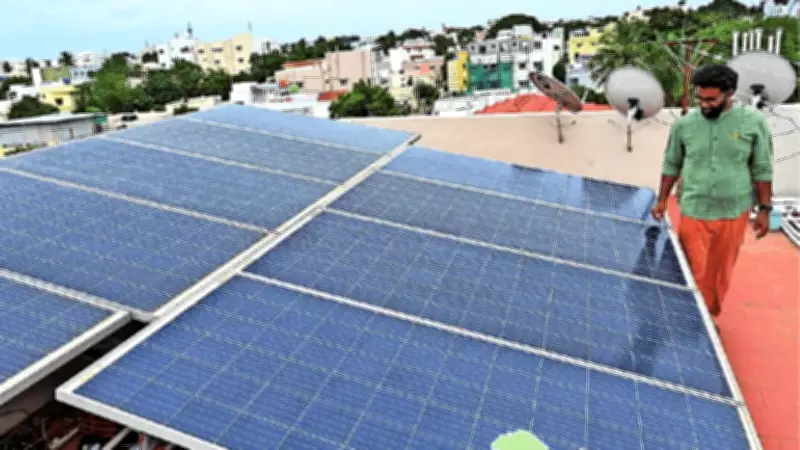
Rooftop solar systems are complex, involving panels, inverters, mounting structures, cables, and more. Regular cleaning and maintenance are essential for optimal performance, but dust, bird droppings, and shadows can reduce generation by 20-30% or more. Quality control lapses, such as poorly mounted panels or improper wiring, pose safety risks and lower efficiency.
Saurabh Marda, co-founder of Freyr Energy, warned, "The biggest mistake customers make is choosing the wrong vendor. Customers get swayed by lower upfront prices without checking the installer's track record." He advised reviewing installation data on the PM Surya Ghar portal to assess company experience. Inexperienced players may quote non-inclusive prices, install substandard systems, and exit the business, undermining consumer confidence.
Tyagi cited a CEEW 2023 study showing that soiling, shadow effects, and wiring issues cause wide variations in capacity utilization. "There is need for a standard operating procedure for consumers after the annual maintenance contract ends," she said, recommending consumer capacity-building for cleaning, monitoring, and reporting faults. Some companies offer advanced systems with cleaning alerts or self-cleaning features, and a new ecosystem is emerging where cleaning services are available for a price.
Grid Stability Concerns and Future Outlook
As rooftop solar penetration deepens, grid-readiness becomes critical. During sunny hours, installations often produce surplus energy fed into the grid, while non-solar hours see sharp demand spikes, causing voltage fluctuations and instability. A senior discom official highlighted these challenges, noting that distribution networks must accommodate large-scale RTS penetration.
Experts suggest hybrid systems with battery storage could ease grid stress and enhance reliability, though this adds nearly Rs 50,000 in costs. Marda noted that most cities don't experience prolonged power cuts, making battery storage less recommended due to extra expense. From a market perspective, sustained momentum depends on process efficiency, administrative coordination, smoother net-metering approvals, faster subsidy disbursal, and improved consumer trust.
Achieving the one-crore target by 2027 hinges on addressing these challenges while leveraging the scheme's popularity. Back in Sahibabad, Agarwal's experience continues to inspire others, highlighting the transformative potential of rooftop solar in India's energy landscape.