Rajasthan Invests Rs 35 Crore in AI-Powered Energy Management to Tackle Power Procurement Challenges
In a significant move to combat persistent inefficiencies in power procurement and rising operational costs, Rajasthan Urja Vikas and IT Services Ltd (RUVITL) has announced plans to deploy an integrated energy portfolio management system backed by artificial intelligence and advanced digital tools. The ambitious project, with a budget of Rs 35 crore, aims to address critical issues stemming from forecasting errors and market volatility that have long plagued the state's power sector.
Addressing Core Operational Challenges
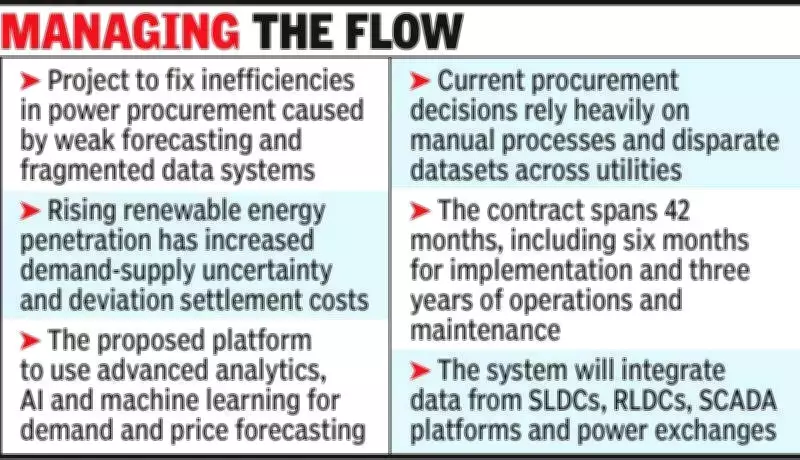
The initiative specifically targets multiple operational hurdles that have contributed to financial strain and grid instability. These include demand uncertainty, renewable energy intermittency, deviation settlement charges, and fragmented data systems across various load dispatch centers and distribution companies. Officials have highlighted that the current lack of an integrated, real-time decision-support platform frequently results in sub-optimal scheduling, excessive reliance on short-term market purchases, and unnecessary financial exposure.
"The increasing share of renewable energy and market-based procurement requires a far more sophisticated planning and forecasting framework," emphasized Ajitabh Sharma, Additional Chief Secretary (Energy). "Advanced analytics, artificial intelligence, and machine learning tools will form a key part of the solution. This initiative is aimed at strengthening data-driven decision-making, reducing avoidable power purchase costs, and improving grid discipline across the state."

Comprehensive Digital Solution Through Competitive Bidding
According to individuals involved in the planning process, the implementation agency—to be selected through a competitive bidding process—will be responsible for supplying, developing, and supporting a comprehensive digital solution. This system will encompass multiple critical functions:
- Demand and renewable energy forecasting
- Scenario analysis for various procurement strategies
- Scheduling and dispatch planning optimization
- Trade optimization across different market platforms
- Energy accounting and invoice verification
Currently, power procurement decisions in Rajasthan often rely on manual processes, severely limiting utilities' ability to optimize their long-term and short-term procurement mixes or respond swiftly to price signals in power exchanges. This operational gap has become increasingly problematic as the state expands its renewable energy capacity.
Mitigating Financial Penalties and Improving Efficiency
Forecasting inaccuracies have particularly increased exposure to deviation settlement mechanism (DSM) penalties, especially during periods of high renewable generation variability. The proposed AI-driven system is expected to integrate data from multiple sources including State Load Dispatch Centers (SLDCs), Regional Load Dispatch Centers (RLDCs), SCADA platforms, and power exchanges.
Officials from Urja Vikas explained that this integrated approach will enable utilities to evaluate multiple procurement scenarios simultaneously, optimize both bilateral and exchange-based purchases, and significantly improve overall portfolio efficiency. The system's real-time capabilities are designed to provide decision-makers with actionable insights that can prevent costly market missteps and enhance grid stability.
The Rs 35 crore investment represents a strategic shift toward technology-driven governance in Rajasthan's energy sector, with potential implications for other states facing similar challenges in managing their power portfolios amid India's renewable energy transition.