

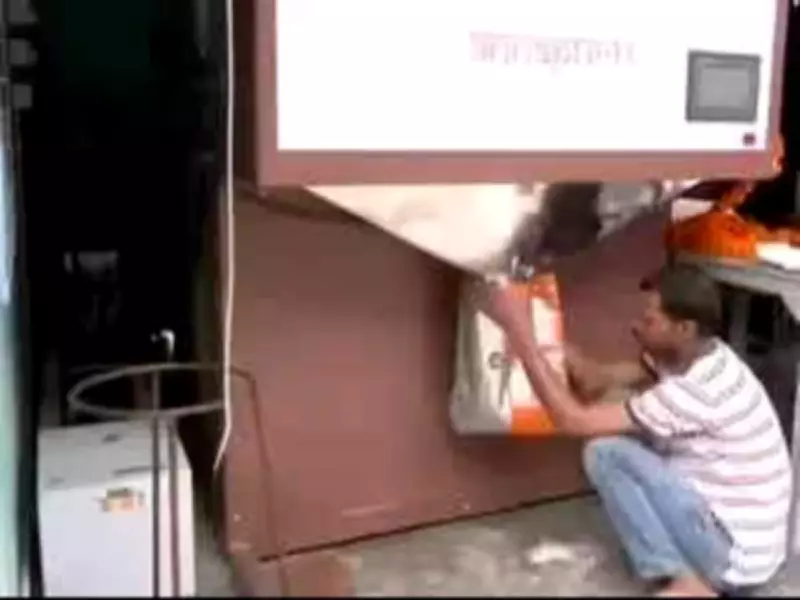
Rajasthan Pioneers Automated Grain ATMs to Revolutionize Ration Distribution
In a significant technological advancement for food security, Rajasthan is gearing up to introduce automated "grain ATMs" for ration distribution. This innovative move is designed to alleviate congestion at fair price shops and enhance delivery efficiency for over 4.35 crore beneficiaries covered under the state's food security scheme.
Pilot Phase to Launch in Three Key Districts
The rollout will commence with pilot installations in Jaipur, Bharatpur, and Bikaner, with operations expected to begin shortly. These machines, named Annapurti, will enable beneficiaries to collect their entitled quota of wheat, rice, and pulses in a manner akin to withdrawing cash from a bank ATM.
Ambrish Kumar, the food and civil supply department secretary, elaborated on the project's development. "We have already selected locations in the three districts of Jaipur, Bharatpur, and Bikaner. The project is developed under the United Nations World Food Programme initiative. Now the central government and officials from the UN would approve these locations and initiate the project," he stated.

Specific Locations Identified for Initial Implementation
Officials have pinpointed specific sites in Jaipur for the pilot phase, including areas near the Moti Doongri Ganesh Temple and in Sanganer. This strategic selection aims to test the system's effectiveness in diverse urban settings before a broader expansion.
Sumit Godara, the food and civil supplies minister, highlighted the long-term vision. "The system will gradually expand statewide after the pilot phase. Beneficiaries will be able to withdraw grain using their ration cards from these machines, regardless of which city they are in," he explained.
Benefits of the Automated System
The Annapurti machines are engineered to dispense ration quickly with minimal human intervention. Officials anticipate several key advantages:
- Reduced waiting time at distribution points.
- Elimination of manual weighing errors, ensuring accurate portions.
- Enhanced transparency in the Public Distribution System (PDS).
An official detailed the current challenges: "At present, beneficiaries need to visit ration shops, where their ration cards are verified manually or through biometric authentication. Shop operators then weigh and distribute grain, often resulting in delays, long queues, and occasional complaints of under-weighing. Here, the beneficiaries just need to click twice or thrice to get their entitled quota of ration."
A Technology-Driven Shift in Ration Delivery
This initiative marks a pivotal technology-driven transformation in ration delivery for Rajasthan. The state government is actively seeking to modernize the PDS, making access more convenient and reliable for beneficiaries. If the pilot proves successful, plans are in place for a wider expansion across Rajasthan, potentially allowing ration card holders to access food grains from automated machines without being restricted to a single distribution point.
The move underscores Rajasthan's commitment to leveraging innovation for public welfare, setting a precedent for other states to follow in enhancing food security through digital solutions.






