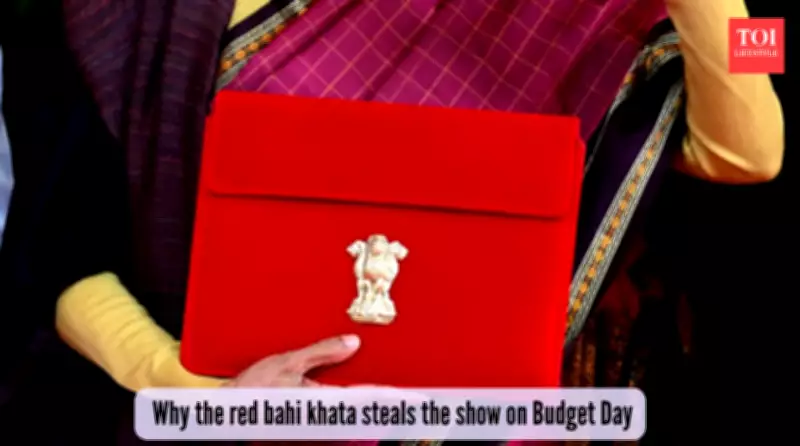
The Red Bahi Khata: More Than Just a Budget Day Symbol
Every year on February 1, a palpable shift sweeps across India. Offices slow to a crawl, news channels switch to live coverage, and casual chai breaks transform into intense budget speculation sessions. While Budget Day is fundamentally about tax policies, economic promises, and fiscal allocations, it's also marked by a powerful visual cue that captures the nation's imagination.
That Iconic Red Moment
The real anticipation begins when the Finance Minister emerges from Parliament holding that distinctive red bahi khata. Even before the budget speech commences, millions of Indians begin their mental calculations. Will there be tax relief for the middle class? Can we expect reductions in fuel prices? What about employment generation initiatives? That single red folder somehow manages to encapsulate the collective hopes, anxieties, and expectations of an entire nation in one symbolic frame.
Colonial Roots and Historical Evolution
The tradition of using red containers for important financial documents didn't originate in India. This practice traces back to British customs, where significant financial papers were transported in red leather bags to convey seriousness and official authority. India adopted this convention during colonial times, beginning with the first budget presentation in 1860, and continued using the red briefcase even after gaining independence.

Interesting historical note: The term "budget" itself derives from the French word bougette, which literally translates to "small bag" or "purse." This linguistic connection underscores how financial planning has always been associated with containers and documentation.
A Deliberate Shift to Indian Identity
In 2019, Finance Minister Nirmala Sitharaman introduced a significant change by replacing the traditional briefcase with a red bahi khata. This cloth-bound ledger has been used by generations of Indian traders and merchants for maintaining accounts. This seemingly simple substitution carried profound symbolism. It represented a conscious move away from colonial legacies toward embracing indigenous traditions. The bahi khata felt familiar, authentic, and distinctly Indian.
Traditional Exterior, Modern Interior
While maintaining the traditional red exterior, the budget presentation has undergone substantial modernization. Since 2021, India's budget has transitioned to a completely paperless format, with all documents stored digitally on a tablet housed within that same red cover. This blend of outward tradition with inward technological advancement perfectly mirrors contemporary India's journey—honoring heritage while embracing innovation.
The Cultural Significance of Red
The color red holds deep cultural meaning in Indian society. It symbolizes auspiciousness, energy, celebration, and new beginnings—associations evident in weddings, festivals, and religious ceremonies. When the national budget arrives wrapped in red, it subtly transforms from a mere financial announcement into something more profound. It becomes a symbolic gesture representing potential prosperity, economic renewal, and the nation's forward momentum.
Today, the red bahi khata stands as more than just a container for budget documents. It has evolved into a powerful national symbol that bridges historical traditions with contemporary aspirations, colonial past with independent identity, and economic planning with cultural significance.