Solar-Powered Irrigation Offers Major Benefits for Indian Agriculture
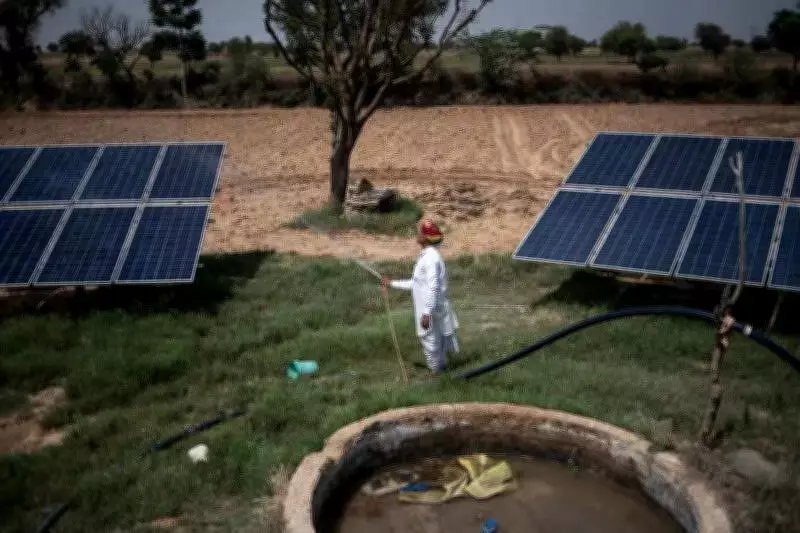
A groundbreaking report released on Wednesday highlights the transformative potential of solar-powered irrigation in India. According to the study, this approach can significantly reduce agricultural power subsidies, ensure reliable daytime electricity, raise farmers' incomes, and generate substantial employment opportunities.
Key Findings on Cost Savings and Implementation
Titled 'Scaling solar power for irrigation in India: Lessons from PM-KUSUM', the report was jointly released by leading climate think tanks: the Council on Energy, Environment and Water, the Center for Study of Science, Technology and Policy, and the International Institute for Sustainable Development. The research finds that decentralised solar irrigation already costs between Rs 3 and Rs 4 per unit in many states, which is far below the Rs 6 to Rs 7 per unit supply cost borne by utilities.
Using a purpose-built methodology, researchers estimate that solarising just 10% of agricultural electricity demand could yield substantial savings for states over a 25-year period. Anas Rahman, senior policy adviser at IISD, emphasised, "Even modest solarisation of agricultural power demand can significantly reduce long-term subsidy burdens while delivering reliable electricity to farmers."

Focus on PM-KUSUM Components and Progress
The study specifically examines Component A, which involves small-scale grid-connected solar plants on farmers' land, and Component C, which focuses on feeder-level solarisation under the Pradhan Mantri Kisan Urja Suraksha evam Utthaan Mahabhiyan scheme. While PM-KUSUM has delivered clear benefits, implementation has fallen short of targets. Deployment to date stands at only 8.4% under Component A and 38.2% under Component C.
Beyond fiscal savings, the scheme has supported job creation and enhanced farmer incomes. More than 32,000 jobs have been generated under components A and C. Farmers can earn an estimated 11% to 16% annual return on investment by installing solar plants ranging from 0.5 MW to 2 MW and selling electricity to the grid. Additionally, leasing land for these projects can generate around Rs 30,000 per acre per year.
Challenges and Recommendations for Scaling Up
Despite early interest from states, progress has been slowed by several barriers:
- Low farmer awareness
- Land availability constraints
- Tariff viability challenges
- Grid limitations
- Broader institutional and financial bottlenecks
Addressing these issues will be critical to scaling impact in the next phase. State-level interest is building, with over 40 GW tendered under PM-KUSUM in the past two years and power purchase agreements signed for more than 20 GW.
Shalu Agrawal, director of programmes at CEEW, stated, "PM-KUSUM has moved beyond pilots to a scale-ready pipeline, with significant capacity already tendered and under development. What matters now is execution, getting tariffs right, reducing payment risk, and integrating projects smoothly into the grid. Done well, solar irrigation will become a cost-effective, mainstream solution for meeting agricultural power demand while easing subsidy pressures."
Future Directions and Institutional Support
With the first phase of PM-KUSUM concluded on March 31, 2026, the report recommends a next-generation scheme that incorporates lessons learned and is flexible and investment-ready. This would enable states to adapt, innovate, and tailor the scheme to local conditions.
Rishu Garg, senior policy specialist at CSTEP, added, "States have been the real drivers of innovation under PM-KUSUM. The next phase must allow states more flexibility, strengthen state implementing agencies, expand planning capacity at the distribution level, and prepare rural grids to handle decentralised solar. Without these institutional foundations, scale will remain uneven across states."
The report outlines key recommendations to overcome existing challenges:

- Ensure tariff viability through competitive bidding or market-linked benchmarks
- Ease land constraints using geographic information system-based tools and approval-ready land banks
- Strengthen distribution company ownership and planning
- Prepare the grid through hosting-capacity assessments and feeder planning
- Unlock financing via payment security mechanisms and blended finance
- Improve farmer uptake through local outreach and extension networks
These steps are essential for realising the full potential of solar irrigation in India, transforming agricultural power supply into a sustainable and economically viable system.