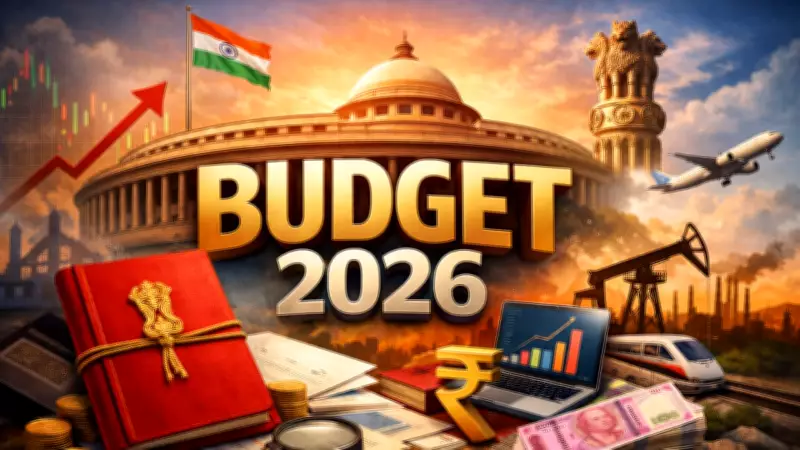
As anticipation builds ahead of the presentation of the Union Budget 2026–27 on Sunday, February 1, 2026, national attention is once again turning to the government's tax proposals, spending priorities and fiscal mathematics. The annual Budget represents not just an economic exercise but one of the most closely watched economic and policy events in India, shaping everything from household finances to industry sentiment and national development trajectories.
Beyond The Numbers: A Rich Historical Tapestry
However, beyond the figures and fiscal projections lies a fascinating history filled with unusual traditions, colonial-era legacies and Constitutional quirks that have shaped India's most important financial statement. Here are ten intriguing and lesser-known facts about India's budget that go beyond the headlines:
1. 'Budget' Isn't A Constitutional Term
While commonly referred to as the "Budget," this word itself does not appear anywhere in the Indian Constitution. The Constitution only mentions the "Annual Financial Statement" under Article 112, which outlines the government's estimated revenues and expenditures for the coming fiscal year. This technical distinction highlights how popular terminology sometimes diverges from legal language.

2. Budget On Sunday: An Unprecedented Occurrence
In a first in recent memory, the Union Budget for 2026-27 is set to be presented on a Sunday, February 1, 2026. Historically, budgets have been presented exclusively on working days. In 1999, when the scheduled date of February 28 fell on a Sunday, then Finance Minister Yashwant Sinha presented the Union Budget a day earlier on February 27 (Saturday), maintaining the convention of presenting the budget on the last day of February.
3. The First 'Indian Budget' Predates The Constitution
The concept of a budget in India was introduced under British colonial rule. April 7, 1860 witnessed the first budget presented by James Wilson of the East India Company to the British Crown, long before Indian independence or the Constitution came into existence. This colonial origin story reveals how administrative practices often outlive political regimes.
4. Post-Independence First Budget
India's first Union Budget after independence was presented on November 26, 1947 by RK Shanmukham Chetty, with total expenditure amounting to just Rs 197 crore. Nearly half of this modest amount was allocated to defence spending, reflecting the urgent need to stabilize the newly independent nation amidst partition turmoil and security challenges.
5. The Budget's Traditional Evening Presentation
Up until 1999, the Budget was customarily presented at 5 pm—a colonial-era timing that gave officials working on printing the document overnight hours to prepare final copies. This practice aligned announcements with UK working hours, as India's time zone (5 hours and 30 minutes ahead of British Summer Time) ensured the Budget reached London during business hours. It was in 1999 that then-finance minister Yashwant Sinha, serving under the Atal Bihari Vajpayee government, moved the Budget presentation to 11 am, establishing a convention that remains in place today.
6. Shift To February 1 From Last Day Of The Month
Until 2017, the Budget consistently arrived on the last day of February. However, in 2017, the presentation date was advanced from February 28 to February 1 to streamline the parliamentary approval process and enable implementation from the start of the new fiscal year on April 1—a practical reform that continues to shape the budgetary calendar.
7. From English Only To Bilingual Documents
During British rule, the Budget and its supporting documents were prepared exclusively in English. In 1955, under then-finance minister CD Deshmukh, Hindi was used for the first time alongside English, making the Budget more accessible and inclusive for lawmakers and the general public across India's linguistic diversity.

8. The Symbolic 'Bahi Khata' Tradition
Since 2019, the Budget documents have been carried to Parliament in a traditional "bahi khata" (red ledger) instead of the colonial briefcase, symbolising India's cultural identity in its fiscal practices. The red cloth folder, embossed with the national emblem, reflects the country's own accounting traditions. Since 2021, this traditional carrier has been used to transport a digital tablet as part of the government's move toward a paperless Budget, blending heritage with modernity.
9. Integrated Railway Budget
Until 2016, India's Railway Budget was presented separately from the Union Budget—a colonial legacy dating back to 1924. It was merged with the main Union Budget starting in 2017 to streamline fiscal planning and resource allocation. The Modi government's decision, effective with Budget 2017, followed recommendations from a two-member committee including Niti Aayog member Bibek Debroy and Kishore Desai, marking a significant administrative consolidation.
10. Budget Printing Locations And Security
Until 1950, the Union Budget was printed at Rashtrapati Bhavan, but following a security leak, printing operations were shifted to a press on Minto Road in New Delhi. Later, in 1980, a dedicated government press was established within North Block, the seat of the Finance Ministry, enhancing both security and logistical efficiency for this sensitive document.
These historical insights reveal how India's budget has evolved from colonial administrative tool to sovereign financial statement, incorporating both tradition and innovation along its remarkable journey.