The Indian Parliament on Friday gave its final approval to a landmark legislation aimed at overhauling the country's flagship rural employment program. The Viksit Bharat – Guarantee for Rozgar and Ajeevika Mission (Gramin) Bill, 2025, commonly referred to as the VB-G Ram G Bill, was passed by the Rajya Sabha, completing the parliamentary process. This came just hours after the Lok Sabha had cleared the bill on Thursday, setting the stage for a significant transformation in how rural job guarantees are implemented.
Stormy Passage and Opposition Protests
The bill's passage was anything but smooth, marked by strong protests from opposition members. Led by Congress MPs, the opposition demanded that the proposed law be sent to a parliamentary committee for detailed scrutiny. When these demands were rejected, the scene in both Houses turned tumultuous. Opposition MPs entered the well of the House, tore copies of the legislation, and staged continuous demonstrations until the voting was completed.
A central point of contention was the removal of Mahatma Gandhi's name from the framework. The old scheme was known as the Mahatma Gandhi National Rural Employment Guarantee Act (MGNREGA). Opposition leaders alleged that the government was disrespecting the Father of the Nation by stripping his name from the revamped program.

Government's Defence and New Focus
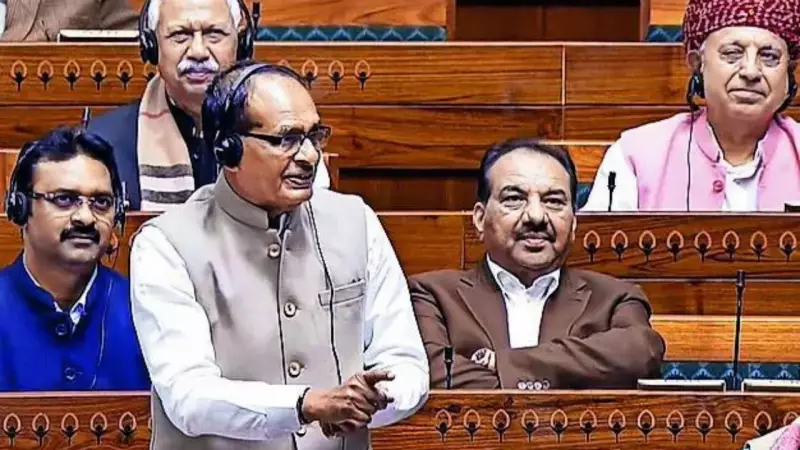
Replying to the debate in the Lok Sabha, Rural Development Minister Shivraj Singh Chouhan mounted a robust defence of the new legislation. He stated that the VB-G Ram G mission substantially improves upon MGNREGA, which he claimed had become "riddled with corruption and inefficiency."
Chouhan clarified that Mahatma Gandhi's name was not part of the original 2005 law and was added only through an amendment in 2009. He turned the tables on the Congress, accusing the party of naming numerous schemes and institutions after members of the Nehru-Gandhi family while now politicizing the issue.
The minister outlined the key shift in the new scheme: moving beyond mere wage payments to focus on creating durable rural assets. He emphasized that the implementation would be made more transparent to curb the malpractices alleged in the previous program. Chouhan also addressed concerns about funding, revealing that the government has allocated over Rs 1.5 lakh crore for the scheme, with the Centre's share exceeding Rs 95,000 crore. On the states bearing 40% of the expenditure, he stated that development is a shared responsibility.
Parliamentary Drama and Accusations
The debate was heated and lengthy. Speaker Om Birla noted that 99 MPs participated in the eight-hour discussion in the Lok Sabha before the bill was put to vote. Minister Chouhan accused the opposition of degrading parliamentary debate into "bheedtantra and goondatantra" (mob rule and hooliganism) and criticized the conduct of Congress leaders during the proceedings.
With the bill's passage in both Houses, the stage is now set for the formal rollout of the VB-G Ram G mission. The government claims this marks a new chapter in rural development, aiming for asset creation and greater transparency, while the opposition decries it as an erasure of a legacy and a hurriedly passed law lacking scrutiny.