

Court Delivers Justice for Poached Asiatic Elephant in Similipal
A Bhubaneswar court has handed down significant prison sentences to 11 individuals convicted of poaching a male Asiatic elephant inside the protected Similipal Tiger Reserve in November 2023. The court sentenced Ghasiram Jerai, Anand Kerai, Shivshankar Banara, Narendra Banara, Chaku Alda, Debara Badra, Papulu Badra, Markand Ho, Tuku Badra, Santanu Badra, and Berga Badra to four years' imprisonment each for their roles in this serious wildlife crime.
Dismantling Elephant Hunting Networks
According to officials from the wildlife wing of the forest department, this conviction represents a substantial victory in the fight against organized poaching. The successful prosecution helps dismantle three notorious elephant hunting gangs that have been operating in and around the Similipal region, threatening the survival of this endangered species.
The investigation revealed sophisticated criminal operations: While 11 individuals have been convicted, 12 other accused remain absconding despite repeated notices from authorities. The court punished the convicted individuals under multiple sections of the Wildlife Protection Act, 1972, including sections 2, 9, 27, 29, 30, 31, 32, 39(a), 39(b), 39(d), 48-A, 49-B, 50 and 52.

Gruesome Details of the Poaching Incident
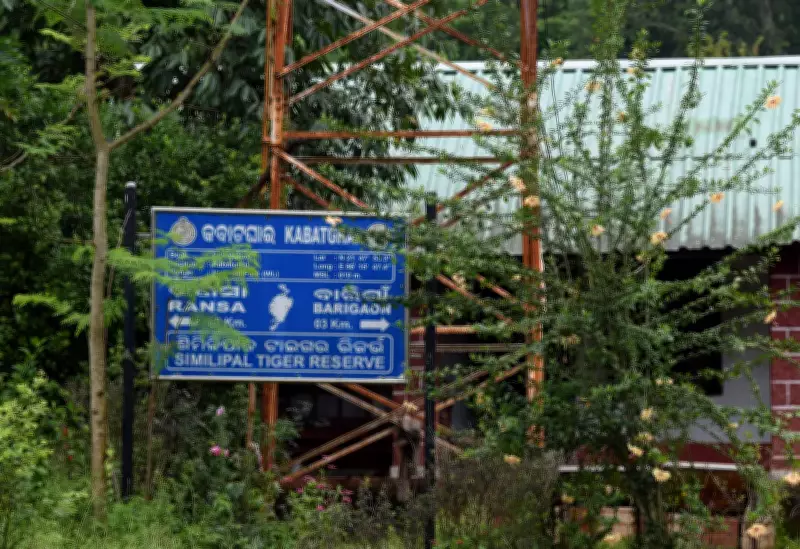
The crime involved illegally entering the core area of Similipal's Kabatghai-I beat and killing the Schedule-I protected male Asiatic elephant with a poisonous arrow. Forest personnel discovered the elephant carcass during routine patrolling at Chulipanidanda forest, but the discovery came late in the investigation timeline.
Upon inspection, officials made disturbing findings: the front portion of the elephant's skull had been deliberately cut off, while both tusks and the lower mandible on both sides were completely missing. This indicated a targeted operation focused on harvesting valuable ivory rather than random killing.
Scientific Evidence Leads to Conviction
Despite the delayed discovery of the carcass, investigators gathered compelling scientific and circumstantial evidence that proved crucial for the successful prosecution. A postmortem examination provided the breakthrough evidence when veterinary surgeons, using a metal detector, discovered a foreign object inside the elephant's body.
The judgment detailed this critical finding: "After making an incision, they recovered a 4.5-inch metal arrowhead." The postmortem further revealed that all internal organs remained intact, leading wildlife experts to conclude the elephant likely died from being struck by a poisonous arrow rather than from natural causes or other injuries.
Comprehensive Investigation and Trial
Investigators uncovered the involvement of a large organized group in both the poaching operation and subsequent illegal trade of elephant tusks. The investigating officer arrested the 11 convicted individuals and seized incriminating materials from their possession, building a strong case against them.
During the trial, the prosecution presented a robust case, examining 18 witnesses to establish the guilt of the accused. The comprehensive evidence presentation proved effective despite the 12 absconding accused failing to appear before the investigating officer or participate in the legal proceedings.
This landmark conviction sends a strong message to wildlife criminals operating in protected areas and demonstrates the effectiveness of scientific investigation methods in prosecuting environmental crimes. The case highlights ongoing challenges in protecting endangered species while showcasing legal systems' capacity to deliver justice for wildlife offenses.






