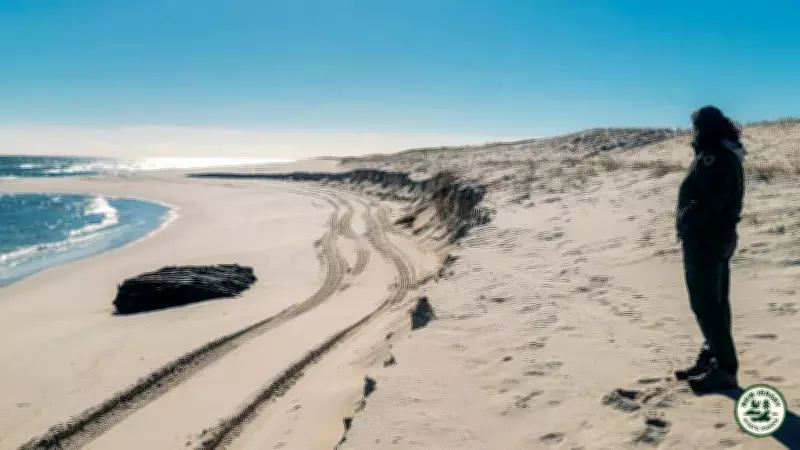
Winter Storms Unearth 19th-Century Shipwreck on New Jersey Beach After 136 Years
In a remarkable discovery that seems straight out of a history book, powerful winter storms along the New Jersey coastline have revealed a long-lost 19th-century shipwreck that had been buried beneath the sand for 136 years. The exposed remains of the vessel, identified as the schooner Lawrence N. McKenzie, have emerged at Island Beach State Park, captivating visitors and park officials alike with this rare window into maritime history.
A Ship Lost to Time and Tide
For weeks, relentless winter weather—characterized by strong winds, rough surf, and shifting sands—has been eroding the shoreline at Island Beach State Park. This natural process, while common along this stretch of coast, has this season been intense enough to strip away layers of sand that had concealed the wreck for generations. What initially appeared as mere driftwood or wooden beams blending into the beach is now confirmed by park officials to be the remains of an actual vessel that sank more than a century ago.
Historical records indicate that the Lawrence N. McKenzie met its fate in March 1890 while navigating through thick fog near Barnegat, New Jersey. The schooner was on the final leg of a lengthy journey spanning over 1,600 miles, carrying a cargo of oranges destined for New York City. Despite rescue teams successfully saving all eight crew members and the captain—who shared the ship's name, Lawrence N. McKenzie—the vessel itself could not be salvaged. Reports from the era note that it had already taken on several feet of water before being abandoned, eventually sinking into the Atlantic Ocean.
The Brief Life of the Lawrence N. McKenzie
Constructed in 1883 in Essex, Massachusetts, the Lawrence N. McKenzie had a relatively short operational life of under seven years. Measuring about 98 feet in length, the ship was valued at approximately $9,000 at the time of its sinking, with an additional $2,000 worth of citrus cargo onboard. After the wreck, it slowly disappeared beneath the sands and shifting shoreline, leaving no visible trace for over 130 years until this winter's storms brought it back to light.
Island Beach State Park officials have emphasized in a statement that such winter erosion is a normal coastal process. Strong seasonal storms often pull sand away from beaches, temporarily narrowing the shoreline and uncovering hidden artifacts. While most beaches naturally rebuild during the calmer summer months, this particular winter's conditions proved sufficiently harsh to reveal these long-buried remains.
Preservation and Public Interest
In response to the discovery, park staff are now closely monitoring the exposed structure and have alerted maritime archaeology experts for further study. Visitors are being asked to admire the wreck from a distance, as touching or removing any part of the ship is strictly prohibited and could result in fines. This precaution ensures the preservation of the site for historical analysis and future generations.
For now, the exposed timbers offer a fleeting yet fascinating glimpse into New Jersey's rich maritime past, made visible through the combined forces of wind, waves, and time. This discovery not only highlights the dynamic nature of coastal environments but also underscores the enduring stories hidden beneath our shores, waiting to be rediscovered by the elements.