24-Hour Police Standoff Over IYC Arrests Ends After Dramatic Confrontation
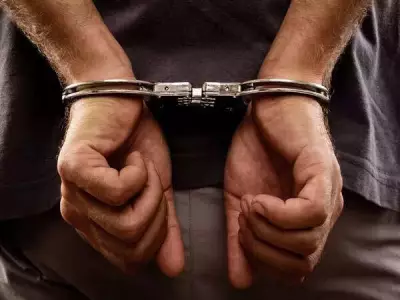
A dramatic jurisdictional standoff between Delhi Police and Himachal Pradesh Police over the arrest of three Indian Youth Congress (IYC) workers for a shirtless protest at the AI Summit in Delhi dragged on for nearly 24 hours, finally resolving in the early hours of Thursday. The confrontation involved multiple interceptions, legal wrangling, and significant political fallout.
Multiple Interceptions and Procedural Disputes
The Delhi-Haryana police team was stopped three separate times by Shimla police during their attempt to transport the arrested individuals. The final interception occurred at 4 AM on Thursday, after the team had secured an 18-hour transit remand from the Additional Chief Judicial Magistrate (ACJM) in Shimla. It was only around 6 AM, a full day after the initial arrests, that the Delhi and Haryana officers could finally depart for the national capital with the three accused: Saurabh Singh, Siddharth Avdhoot, and Arbaaz Khan.
The Delhi-Haryana police team had initially apprehended the trio from a resort in Chirgaon, approximately 120 kilometers from Shimla, around 6 AM on Wednesday. Following this action, the resort owner filed a formal complaint with Shimla Police, alleging that 15-20 men in plain clothes had forcibly taken away three guests and seized electronic equipment, including a CCTV digital video recorder (DVR).
In response, Shimla Police, coordinating with Solan Police, intercepted the vehicles at multiple locations including Shoghi, ISBT Shimla, and Dharampur in Solan. The Delhi and Haryana officers informed Shimla Police that the trio was arrested in connection with an FIR registered in Delhi on February 20. A significant jurisdictional confrontation ensued immediately.
Legal Procedures and Escalating Tensions
Shimla Police detained the visiting police team over serious procedural concerns, alleging they were not properly informed about the cross-state operation. According to Himachal Pradesh officials, the Delhi-Haryana team failed to hand over a seizure memo for the items taken from the resort, a critical legal requirement.
Later in the evening, Chirgaon Police registered an FIR for abduction based on the resort owner's complaint. The visiting police team was stopped again at the Shoghi barrier, 15 kilometers from Shimla, amid heated arguments. They were formally informed about the abduction FIR and asked to join the local investigation.
To ensure strict compliance with legal procedures and safeguard the rights of the detainees, Shimla Police produced the three accused before a local court. They also underwent a medical examination at Deen Dayal Upadhyay (Ripon) Hospital in Shimla later that night. Close to midnight, they were presented at the residence of the Shimla ACJM, who ultimately granted the transit remand to Delhi Police.
Political Fallout and Accusations
The extended police standoff triggered a significant political faceoff. A BJP delegation led by Leader of the Opposition and former Chief Minister Jairam Thakur met Governor Shiv Pratap Shukla on Thursday and submitted a memorandum. The delegation alleged interference in Delhi Police's lawful action and accused the Congress government of "political misuse of the police machinery." The BJP demanded a high-level investigation by the central government into the Chief Minister's office and action against officials deemed guilty.
Himachal Chief Minister's media advisor, Naresh Chauhan, strongly rebutted these allegations, terming them "baseless and wrong." He criticized Thakur for "defending Delhi Police instead of supporting state police" and asserted that "the state is not shielding protesters."
Court Proceedings and Custodial Remand
Meanwhile, a Delhi court on Thursday sent the three accused to three days of police custody after Delhi Police sought custodial interrogation. Chief Judicial Magistrate Mridul Gupta passed the order, observing that the accused would be "permitted to meet their counsel during interrogation in accordance with BNSS Section 38 at reasonable intervals fixed by the investigating officer."
Delhi Police produced the IYC workers before the court after bringing them from Himachal Pradesh under the transit remand. Seeking five days' custody, the prosecution submitted that custodial interrogation was essential to ascertain the origin of the conspiracy, establish the chain of command, confirm the mode and method of payment, and confront them with co-accused.
According to the prosecution, Siddharth designed and circulated the content printed on the protest T-shirts, while Saurabh created a WhatsApp group to mobilize participants. Both he and Arbaaz were allegedly present inside the venue during the agitation. The prosecution further alleged that the three were "hiding in resorts in Himachal Pradesh" and, despite repeated warnings and knowledge of their colleague's arrests, continued to conceal themselves, reflecting their "apparent respect for the law," as per Public Prosecutor Atul Srivastav.
Defense Arguments and Case Details
Opposing the custody plea, the defense argued the case must be viewed holistically and was limited to the protest that day, terming the action "witch hunting." The defense contended that the accused were neither seen in CCTV footage nor involved in any hateful speech, and that no police personnel were harmed. They argued the case was built on rhetoric rather than concrete evidence.
The defense, led by advocate Roopesh Bhadoria, also flagged the mechanical use of the phrase "tukde-tukde" in the FIR, questioning whether "investigative agencies were now resorting to recycled narratives instead of credible material evidence."
The court ultimately remanded the trio, along with two other co-accused—Ajay Kumar and Raja Gujjar—in police custody until March 1 in the same case.
Background of the Incident: The AI Impact Summit 2026 began on February 16 at Bharat Mandapam. On February 20, several men allegedly entered the venue wearing T-shirts bearing images of Prime Minister Modi and former US President Donald Trump, along with slogans against the government and the India-US trade deal, leading to the subsequent police action and arrests.