

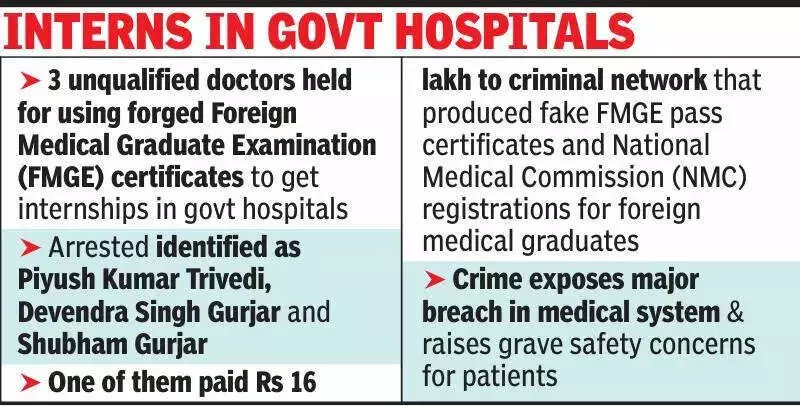
In a shocking revelation that exposes critical vulnerabilities in the medical system, the Special Operations Group (SOG) of the Rajasthan Police on Thursday arrested three individuals posing as doctors in Jaipur. The arrests have uncovered a dangerous racket involving the use of forged Foreign Medical Graduate Examination (FMGE) certificates to secure internships at government hospitals, putting countless patients at grave risk.
The Arrests and the Accused
The SOG's operation led to the apprehension of three men who were fraudulently working as medical interns. The arrested individuals have been identified as Piyush Kumar Trivedi, Devendra Singh Gurjar, and Shubham Gurjar. According to police officials, none of the three possessed the legitimate qualifications required to practice medicine in India. Their alleged modus operandi was to use counterfeit FMGE pass certificates, a mandatory screening test for foreign medical graduates, to deceive hospital authorities and gain placement.
How the Medical Racket Operated
The investigation suggests a well-organized scam targeting the recruitment processes of government healthcare facilities. The FMGE certificate is a crucial document that validates the medical education of students who have studied abroad, allowing them to register and practice in India. The accused are believed to have procured or created fake versions of these certificates to bypass stringent verification checks. This breach allowed them to infiltrate the system and work directly with patients, despite having no authentic medical training or license. The SOG is now probing deeper to uncover the network behind the creation and supply of these forged documents and to determine if more such 'doctors' are operating in other hospitals.

Major Breach and Patient Safety Concerns
This incident highlights a major breach in the safeguards of the medical system. The fact that unqualified individuals could secure positions as interns in government hospitals raises alarming questions about the efficacy of background verification protocols. Interns are involved in direct patient care, including diagnosis, prescribing medication, and assisting in procedures. Having untrained personnel in these roles poses an immediate and severe threat to public health and safety. The case has sparked outrage and calls for an immediate audit of all medical staff credentials across hospitals to prevent such lapses in the future.
The Jaipur police have emphasized that this is not just a case of forgery but a serious crime that endangers lives. The investigation is ongoing to unravel the entire chain of the racket, from document forgers to potential insiders within the medical administration who may have facilitated these placements. This scandal serves as a stark reminder of the need for robust, foolproof verification systems to protect the integrity of the medical profession and, most importantly, the well-being of patients.






