

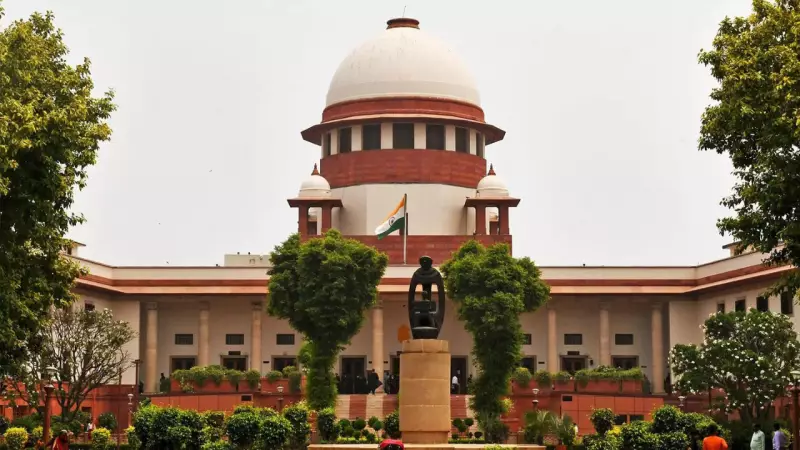
In a stark illustration of the protracted nature of India's judicial process, the Supreme Court has finally concluded a legal battle that spanned 34 years, concerning the termination of a hotel employee. The verdict came a year after the original litigant, D K Sharma, passed away, with the court ruling in his favour and directing compensation to his legal heir.
A Legal Marathon Spanning Decades
The case originated in 1991 when D K Sharma was terminated from his service at the India Tourism Development Corporation (ITDC). Challenging this dismissal, Sharma initiated proceedings at the labour court. The legal journey then progressed through a single bench of the Rajasthan High Court, followed by a division bench, before ultimately reaching the Supreme Court in 2020.
It was not until 2015—nearly a quarter-century after his termination—that the labour court ruled in Sharma's favour. The court ordered his reinstatement with 100% back wages, citing the management's failure to provide evidence supporting the charges against him. However, this was far from the end of the dispute.

The Twisting Path Through Higher Courts
ITDC, dissatisfied with the labour court's decision, appealed to the Rajasthan High Court. A single judge of the HC modified the order, reducing the back wages to 50%. Subsequently, a division bench of the same High Court overturned the earlier decisions entirely, setting aside both the reinstatement order and the payment of any back wages. This prompted Sharma to approach the Supreme Court.
A bench comprising Justices Manoj Misra and Ujjal Bhuyan recently delivered the final judgment. The apex court allowed Sharma's appeal, restoring the single judge's order of 50% back wages. The bench noted that while Sharma had filed an affidavit stating he was not gainfully employed during the intervening period, ITDC had not provided evidence to counter this claim.
Supreme Court's Reasoning and Final Ruling
The Supreme Court justified its decision by considering several key factors. The bench observed the immense lapse of time since the termination in 1991 and noted that the Hotel Ashoka, where Sharma worked, had changed ownership. The court also emphasized the difficulty a long-serving employee faces in finding new employment after crossing a certain age barrier.
"No doubt, a person may do odd jobs to survive but that cannot be a ground to deny back wages, particularly when termination of his service is by way of punishment," the bench stated. It concluded that awarding 50% of the back wages, as initially directed by the High Court's single judge, would serve the ends of justice.
The poignant end to this saga is that D K Sharma did not live to see this outcome, having passed away in the preceding year. The litigation was pursued to its conclusion by his legal heir, who will now receive the awarded compensation. This case stands as a sobering reminder of the human cost behind judicial delays, where justice, though delivered, arrives too late for the one who sought it.






