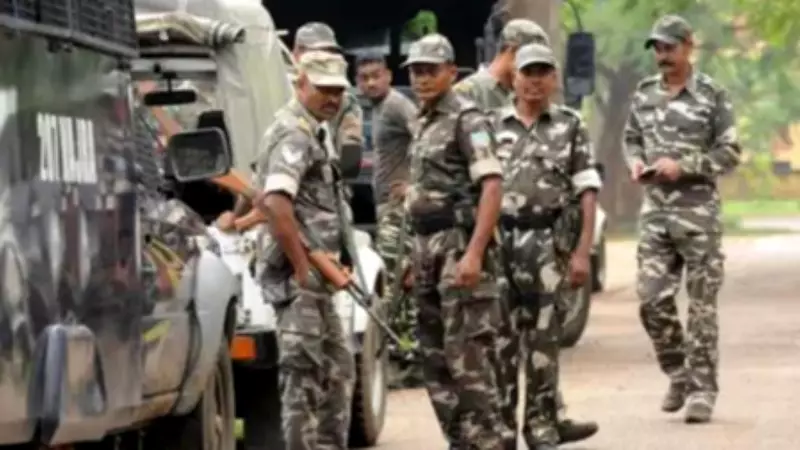
In a significant development highlighting the declining influence of Left-wing extremism in India, the Union Home Ministry presented comprehensive data to the Lok Sabha on Tuesday. The figures reveal a year of substantial progress in counter-insurgency operations, with security forces successfully neutralizing 364 Naxals during the period under review.
Comprehensive Breakdown of Counter-Insurgency Achievements
Junior Home Minister Nityanand Rai, responding to queries regarding the status of Left-wing extremism (LWE) in the country, provided detailed statistics that paint a picture of remarkable improvement. Alongside the neutralization of 364 Maoists, the security apparatus arrested 1,022 individuals associated with the extremist ideology. Perhaps most encouragingly, a substantial 2,337 Maoists chose to abandon the path of violence and surrendered to authorities, embracing the government's rehabilitation initiatives.
Dramatic Reduction in LWE-Affected Areas
The geographical footprint of Maoist violence has contracted dramatically according to the official data. The number of districts reporting incidents of Left-wing extremism has plummeted to just 32 in 2025, representing a stark reduction from the 61 districts affected in 2019. This positive trend extends to police station jurisdictions as well, with only 119 police stations witnessing LWE incidents in 2025 compared to 245 during the same baseline period.

The statistical decline in violent incidents is particularly striking. Left-wing extremism incidents have shown an 88% decrease from a peak of 1,936 recorded in 2010 to merely 234 incidents in 2025. This substantial reduction in violence has directly translated into fewer casualties, with civilian and security personnel deaths in LWE incidents nosediving to 100 in 2025. This figure represents just one-tenth of the fatalities recorded during the high-violence period of 2010.
Decimation of Maoist Leadership Structure
Records accessed by media outlets reveal that the past year witnessed the neutralization of approximately a dozen high-ranking Maoists, including their top commander Nambala Keshava Rao, widely known by his alias Basavaraju. Beyond Basavaraju, who held positions in both the politburo and central committee, eleven additional central committee members were eliminated during 2025 and early 2026.
The leadership attrition extends beyond neutralizations. Five central committee members, including Mallojula Venugopal alias Sonu who also served in the politburo, chose to surrender and reintegrate into mainstream society last year. This has left the Maoist organizational structure severely depleted, with intelligence sources indicating that only one politburo/central committee member and three central committee members remain active. These surviving leaders include Thippiri Tirupathi (current number one), Muppalla Laxman Rao (Ganpathi), Misir Besra, and Malla Raji Reddy (Sangram). Notably, sources suggest that Ganpathi and Sangram, both in their late seventies, have shown limited operational activity in recent times.
Surrender Policy Yields Substantial Results
The government's enhanced incentives for Maoist surrenders have proven remarkably effective since their implementation in 2019. A total of 5,880 Maoists have eschewed violence and laid down their arms during this period, with an impressive 40% of these surrenders (amounting to 2,337 individuals) occurring specifically in 2025 alone. This trend appears to be continuing into the current year, with reports indicating that between January 1 and 15 of this year, 139 Maoists surrendered while 18 were arrested.
Parallel to the surrender figures, law enforcement agencies have maintained pressure through arrests, apprehending 7,409 Maoists since 2019. The cumulative impact of these efforts is reflected in the current classification of LWE-affected areas. Only eight districts across three states are now categorized as LWE-hit, representing a dramatic reduction from the 126 districts that bore this designation in 2018.

Financial Commitment to Eradicate Naxalism
The Central government, having declared a firm deadline of March 31, 2026, to uproot Naxalism from the country, has backed its commitment with substantial financial resources. Minister Rai informed Parliament that the Centre has released Rs 3,682 crore to LWE-affected states. These funds are allocated for critical purposes including operational expenditure, training needs for counter-Naxal security personnel, rehabilitation programs for surrendered cadres, and ex-gratia payments to families of security forces and civilians killed in LWE violence.
An additional Rs 1,761 crore has been sanctioned to strengthen the special forces, intelligence units, and police stations in states grappling with Left-wing extremism. Furthermore, since the 2014-15 fiscal year, central agencies have been provided with Rs 1,224 crore specifically for establishing security camps in Maoist-infested regions and provisioning helicopters essential for counter-LWE aerial operations and rapid response.
The comprehensive data presented to Parliament underscores a multi-pronged strategy combining robust security operations, attractive surrender and rehabilitation policies, and significant financial investment. This approach appears to be yielding tangible results in containing and reducing the decades-old challenge of Left-wing extremism across central and eastern India.