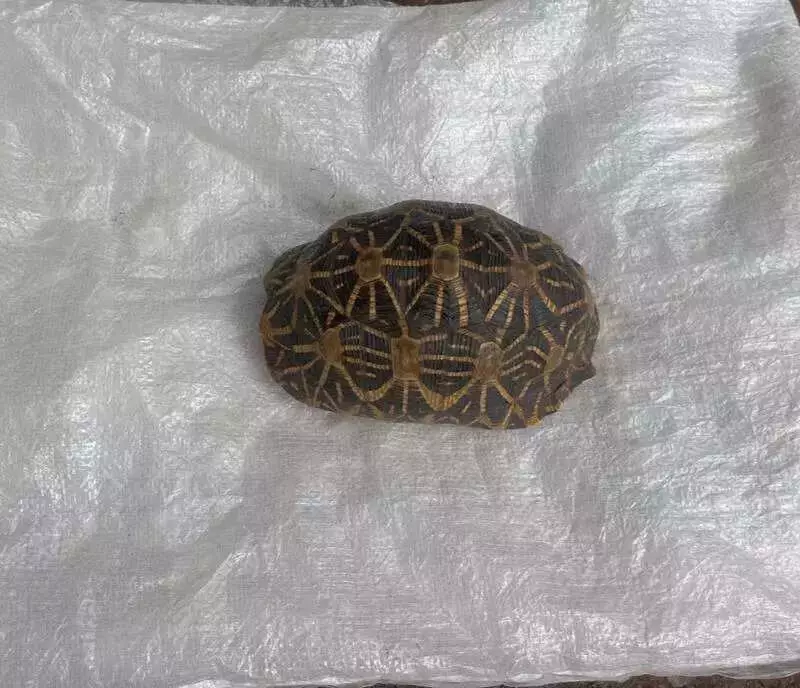
In a significant crackdown on wildlife crime, forest department officers from the Mettupalayam range apprehended eight individuals on Saturday for the illegal possession and attempted sale of a star tortoise near Sirumugai in the Coimbatore district.
Operation Based on Specific Intelligence
Acting on a tip-off regarding illicit wildlife trade activities, a team led by Mettupalayam Forest Ranger S M Sasikumar conducted a raid at a house in Alangombu. The property belonged to one of the accused, Saraswathi, aged 48. During the search, officials discovered a star tortoise, a species protected under Indian law, which was being held for the purpose of illegal trade.
Unraveling the Smuggling Network
Upon interrogation, Saraswathi disclosed the involvement of seven other persons in the illicit operation. Preliminary investigation revealed that the tortoise had been captured from a river near Sirumugai by Abdul Muthaleef, 48, a resident of Kallar near Mettupalayam. The group was allegedly planning to smuggle the protected animal to another state.

The other arrested individuals have been identified as Anbaiya (67), Murugan (41), and Ragu (34), also from Kallar; Rani (55) from Sirumugai; and Sathish (39) and Veera Kumar (26), both natives of Tirupur.
High Demand and Legal Consequences
Forest officer Sasikumar noted that determining the exact market value of the tortoise is difficult because international trade in wild animals is prohibited. However, he highlighted that star tortoises are traded across Asian countries for illegal purposes, with buyers often willing to pay several lakhs of rupees for a single specimen.
Another officer explained that the species is in demand in countries like China, Pakistan, and Bhutan, where they are sometimes kept as pets due to a belief they bring good luck, or used for medicinal and culinary purposes. Smuggling and possession of star tortoises is strictly banned under the Wildlife Protection Act of 1972.
The forest department has registered a case against all eight accused under relevant sections of this Act. They were produced before a judicial magistrate, who ordered them to be remanded in judicial custody.