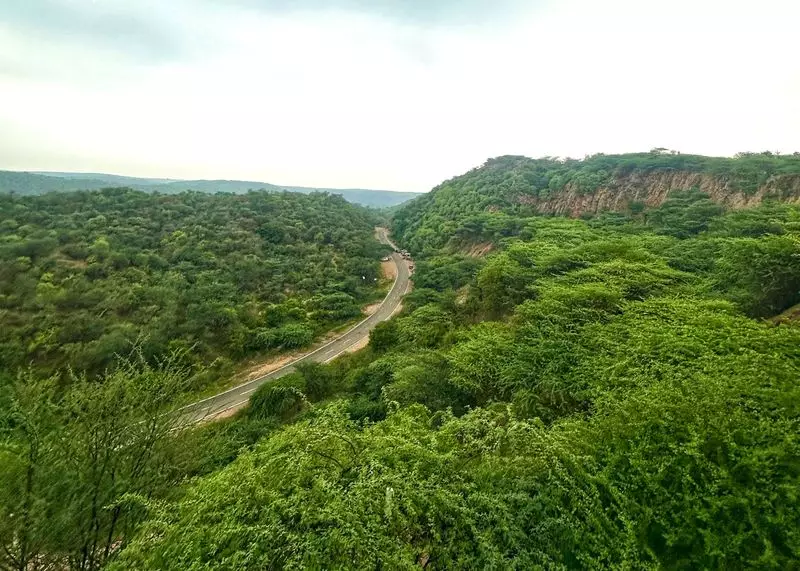
For over a year, the legal and environmental landscape of Haryana has been shaped by a series of crucial judicial pronouncements concerning the very definition of the Aravalli ranges. This ongoing saga, centered on what constitutes the 'Aravalli', has far-reaching consequences for conservation efforts, mining activities, and real estate development in the National Capital Region (NCR).
The Core of the Controversy: Defining a Natural Legacy
The dispute hinges on the interpretation of the Punjab Land Preservation Act (PLPA), 1900. Environmentalists and the state's forest department have long argued that all lands notified under the PLPA should be treated as 'forest' and granted the highest level of protection, akin to the Aravalli hills themselves. This interpretation would place severe restrictions on non-forest activities like construction and mining.
However, real estate developers and some government entities have contested this broad definition. Their stance seeks a narrower interpretation, potentially excluding certain PLPA-notified areas from the stringent forest category, thereby opening them up for development. This clash of interests set the stage for a judicial review.
A Timeline of Pivotal Judicial Interventions
The year witnessed several landmark orders that have progressively clarified the legal standing of the Aravallis. A significant moment came when the Supreme Court, in October 2023, took a firm stand. The bench, led by Justice B.R. Gavai, directed the Haryana government to adhere to its own 2018 affidavit. In that affidavit, the state had explicitly stated that all areas covered under the PLPA were to be considered 'forest' for the purpose of the Forest (Conservation) Act, 1980.
This Supreme Court order was a major victory for conservationists. It effectively meant that any diversion of such land for non-forest purposes would require prior central government approval, a rigorous process designed to minimize ecological damage.
Building on this, the Supreme Court, in November 2023, issued another critical directive. It ordered a complete halt to all mining activities within a one-kilometer radius of the Delhi-Haryana border in the Aravalli region. This ban specifically targeted the districts of Faridabad and Gurugram, areas that have seen intense mining pressure. The court's concern was clear: to protect the fragile ecology of the Aravallis, which act as a crucial green barrier against desertification and air pollution for the entire NCR.
Implications and the Road Ahead for Haryana
The cumulative effect of these rulings has been profound. Firstly, they have significantly strengthened the legal framework for protecting the Aravalli ecosystem. By upholding the forest status of PLPA lands, the courts have placed a substantial hurdle before projects seeking to clear these areas.
Secondly, the mining ban in the border zone has immediate economic and environmental repercussions. While it safeguards the hills from further degradation, it also impacts local mining-dependent economies, necessitating a search for sustainable alternatives.
For the real estate sector, especially in booming zones like Gurugram, these definitions determine the availability of land. Projects planned on contested PLPA land now face immense uncertainty and legal risk. The rulings underscore the growing judicial emphasis on precautionary environmental principles over unchecked development.
The ball now lies largely in the court of the Haryana government. It must implement these directives in letter and spirit, which includes meticulously identifying and notifying all PLPA areas as forest land. The state's commitment to this process will be a true test of its dedication to preserving the Aravallis, a natural heritage critical for the ecological security of millions.
In conclusion, the past year's legal journey in the Aravalli definition row marks a watershed moment for environmental jurisprudence in Haryana. The landmark rulings have tilted the balance firmly towards conservation, setting a precedent that could influence similar ecological battles across India. The definition of a hill range has never mattered more.