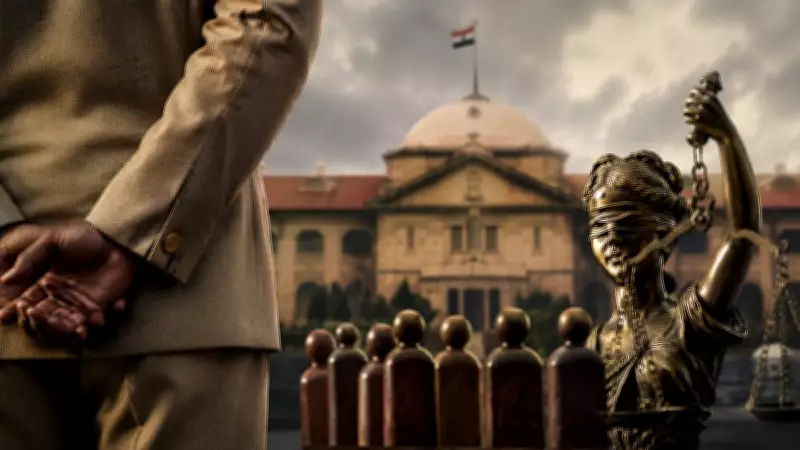
The Allahabad High Court has raised serious concerns regarding what it termed as 'deep political penetration' within the Uttar Pradesh bureaucracy. The observation came during a hearing of a case where a family was accused of financial embezzlement by a local resident. The police subsequently arrested the family and imposed the Gangsters Act against them.
Background of the Case
The case involves allegations of financial irregularities leveled against a family by a resident of the town. Following the complaint, law enforcement agencies took action, leading to the arrest of the family members. The police later invoked the stringent Gangsters Act, which is typically reserved for organized crime and habitual offenders.
High Court's Observations
While examining the matter, the Allahabad High Court expressed dismay over the apparent misuse of legal provisions. The bench noted that such actions indicate a troubling trend of political influence seeping into the administrative machinery. The court emphasized that the bureaucracy must remain impartial and free from external pressures, especially political ones.

The judges highlighted that the Gangsters Act should not be used arbitrarily against individuals without substantial evidence of criminal activity. They stressed that the law is meant to curb organized crime and not to settle personal scores or exert pressure on innocent citizens.
Implications for Governance
This judicial observation has significant implications for governance in Uttar Pradesh. It underscores the need for a robust and independent bureaucracy that operates without fear or favor. The court's remarks serve as a reminder that the rule of law must prevail, and any deviation could undermine public trust in the system.
Legal experts have weighed in, stating that the High Court's intervention is crucial in checking executive overreach. They argue that such scrutiny ensures that administrative actions remain within constitutional bounds.
Reactions and Next Steps
The state government has not yet issued an official response to the court's observations. However, the matter is expected to be followed up in subsequent hearings. The family involved has expressed relief at the court's stance, hoping for a fair trial.
This case adds to a growing list of instances where the judiciary has called out political interference in administrative affairs. It also highlights the ongoing tussle between maintaining law and order and preventing the misuse of power.
As the proceedings continue, all eyes will be on how the Uttar Pradesh bureaucracy addresses these concerns. The High Court's vigilance may prompt a review of procedures to prevent similar incidents in the future.