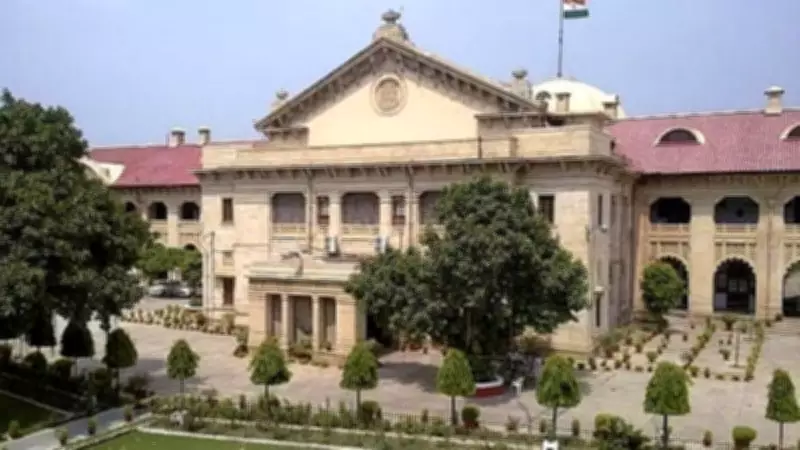
The Allahabad High Court has delivered a significant judgment, stating that private premises cannot be transformed into de facto public religious venues. The court emphasized that while the Constitution protects the right to practice religion, this right is subject to public order, morality, and health.
Court's Observations
Hearing a petition, the bench observed that allowing private property to be used as a public place of worship could lead to law and order issues and infringe upon the rights of others. The court noted that religious activities on private premises must not disturb the peace or create a public nuisance.
Constitutional Framework
Referring to Article 25 of the Constitution, the court stated that the freedom to profess, practice, and propagate religion is not absolute. It is subject to restrictions imposed by the state for reasons of public order, morality, and health. The judgment clarified that no individual or group can claim an unfettered right to convert their private property into a public religious space.

Implications of the Ruling
This ruling sets a precedent for similar cases across the state and country. It reinforces the principle that religious freedom cannot be used to violate public order or the rights of others. The court also directed local authorities to ensure compliance and take action against unauthorized conversion of private premises into religious venues.
Legal experts have welcomed the judgment, stating that it strikes a balance between religious freedom and public interest. The decision is expected to prevent potential conflicts arising from the use of private property for public religious gatherings.