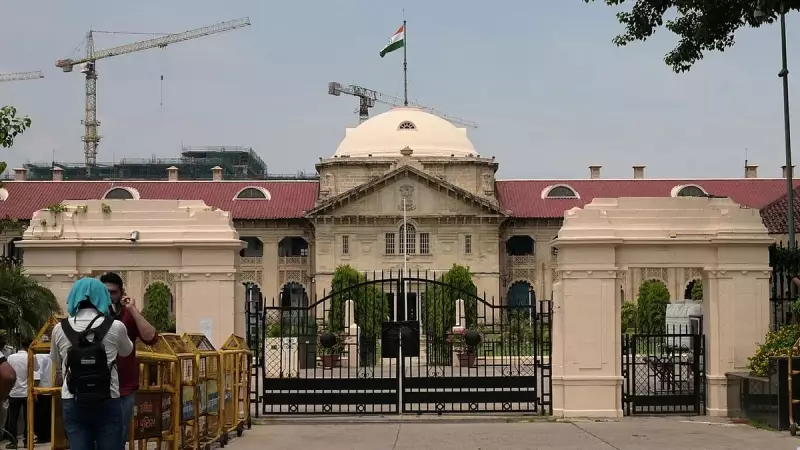
The Allahabad High Court has dismissed a Public Interest Litigation (PIL) that sought an immediate halt to construction activities at a temple in Prayagraj. The court's decision, delivered on December 6, 2025, underscores the importance of concrete evidence in matters of property ownership when seeking judicial intervention.
Court's Rationale for Dismissal
A bench of the High Court found the petitioner's arguments insufficient. The core of the ruling hinged on the failure to establish the fundamental claim of the PIL. The bench explicitly stated that the petitioner had not been able to prove that the land in question, where the temple construction is ongoing, is government property. Without this crucial substantiation, the court saw no grounds to issue the requested order to stop the building work.
Legal Avenue Remains Open for Petitioner
While dismissing the PIL, the court did not completely close the door on the matter. The bench added a significant clarification, noting that the petitioner is free to initiate appropriate legal proceedings in accordance with the law. This indicates that if the petitioner can gather and present stronger evidence regarding the property's status, they may pursue other legal remedies available under the Indian judicial system.

Implications and Next Steps
This dismissal highlights the procedural rigor required in PILs, especially those involving disputes over land and property. The court's decision allows the construction at the Prayagraj temple to continue unless challenged through a different, more substantiated legal channel. The ruling reinforces that PILs, while a powerful tool for public good, must be backed by demonstrable facts and not mere allegations. All eyes are now on whether the petitioner will heed the court's suggestion and launch a fresh case with more robust documentation.