

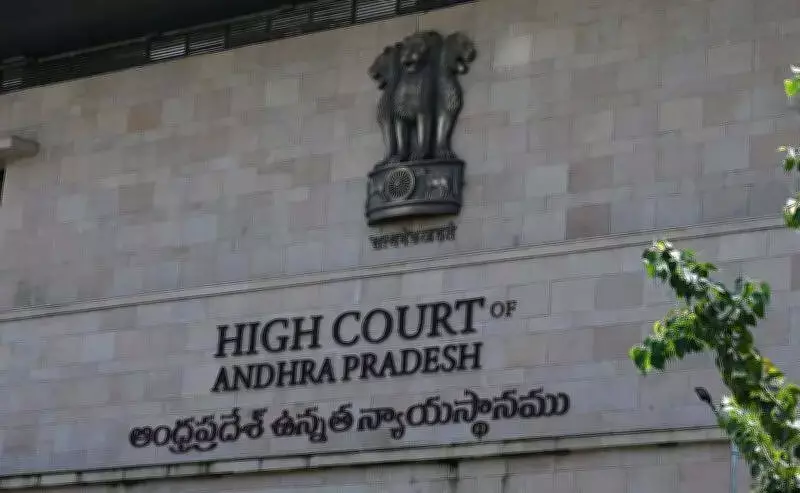
Andhra Pradesh High Court Declines Interim Relief in ORR Alignment Challenge
The Andhra Pradesh High Court, in a significant ruling on Wednesday, declined to grant any interim relief in a Public Interest Litigation (PIL) that challenged the alignment of the Outer Ring Road (ORR) in the state. The bench, comprising Chief Justice Dhiraj Singh Thakur and Justice Challa Gunaranjan, emphasized that the judiciary is not equipped with the technical expertise to determine the appropriate distance between the ORR and the existing Inner Ring Road (IRR).
Doubts Raised Over Petitioner's Motives
During the proceedings, the court expressed skepticism regarding the bona fides of the petitioner, Kaniganti Anjaneya Prasad from Atkur village in Krishna district. The bench observed that numerous PILs are being filed with underlying political interests, casting a shadow over the genuine intent of such petitions. This remark highlights the judiciary's growing concern about the misuse of PILs for purposes other than public welfare.
Petitioner's Arguments Against ORR Alignment
Kaniganti Anjaneya Prasad contended that officials from the National Highways Authority of India (NHAI) overlooked several critical aspects while finalizing the southeast and northeast alignments of the ORR. He argued that the proximity between the ORR and IRR is excessively close, rendering the plan unfeasible. Representing the petitioner, advocate T Sridhar further asserted that the alignment was finalized without conducting essential public hearings, social impact assessments, and environmental impact assessments, which he claimed violates the principles of natural justice.

NHAI's Defense and Judicial Stance
In response, advocate Thandava Yogesh, representing NHAI, defended the alignment by stating that it was meticulously prepared by a team of technical experts. He cited Supreme Court judgments that advise against judicial interference in infrastructure projects, emphasizing the need to avoid delays in critical development initiatives. The High Court bench echoed this perspective, clearly stating their reluctance to intervene in infrastructure matters, thereby reinforcing the principle of non-interference in expert-driven projects.
Court's Emphasis on Technical Expertise
The bench reiterated that judges are not engineers or subject experts, and thus, they are not in a position to adjudicate on technical specifications such as the optimal distance between ring roads. This stance underscores the judiciary's recognition of its limitations in highly specialized areas and its deference to the expertise of relevant authorities.
Future Proceedings
As advocate Sridhar requested additional time to submit supplementary material, the bench scheduled the next hearing for two weeks later. This postponement allows the petitioner to gather further evidence, while the court maintains its current position of non-interference in the interim.
Key Takeaways:

- The Andhra Pradesh High Court refused interim relief in the PIL challenging the ORR alignment.
- The court expressed doubts about the petitioner's motives, hinting at possible political interests.
- NHAI defended the alignment as expert-driven, citing Supreme Court precedents against interfering in infrastructure projects.
- The bench emphasized that judicial intervention in technical matters is inappropriate without specialized knowledge.
- The case has been adjourned for two weeks to allow for the submission of additional materials.





