

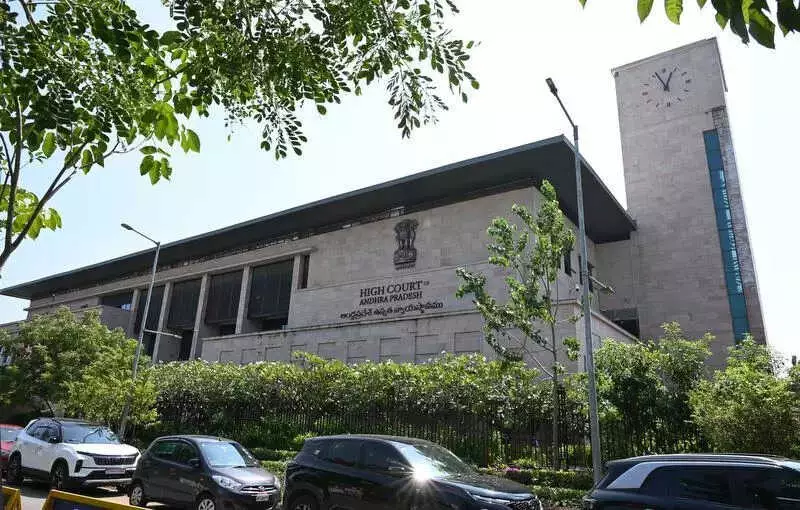
In a landmark verdict that underscores the inviolable nature of shared spaces in residential buildings, the Andhra Pradesh High Court has firmly stated that parking zones and stilt floors in apartment complexes cannot be utilized for commercial activities. The court emphasized that these areas are meant solely for residents and flat owners.
Court's Ruling on Common Areas and Illegal Shops
Justice N Harinath, while delivering the judgment, made it clear that unauthorized constructions on stilt floors cannot be regularized by any government authority. The bench reinforced its stance by referring to an earlier Supreme Court ruling which also prohibited the conversion or sale of common areas for commercial profit.
The case centered on a petition filed by Edarlapalli Balasubrahmanyam and Nadimpalli Sri Divyadurga Madhulika. They had challenged notices issued by the Greater Visakhapatnam Municipal Corporation (GVMC) on December 12 last year. The petitioners claimed to have purchased six shops located on the stilt floor of Madhuri Manor Apartments in Visakhapatnam through registered sale deeds in 1998 and 1999.

The Legal Battle and Contradictory Claims
The petitioners argued that these constructions could be regularized under the provisions of the AP Municipal Corporation Act. They had even submitted a formal application to the GVMC commissioner seeking regularization.
However, the GVMC's standing counsel, ASC Bose, along with lawyers representing the Madhuri Manor Flat Owners Welfare Association, presented a counter-argument. They alleged that the building plan submitted by the petitioners was fabricated and created specifically to bolster their case. Crucially, they pointed out that the petitioners or their predecessors were originally partners in the construction of the apartment building itself, casting serious doubt on the legitimacy of their purchase claims.
Verdict and Directives for Demolition
After a thorough examination of all records, the court concluded that the shops on the stilt floor were built in direct violation of the originally approved building plan. The judgment stressed that long-term possession does not provide a legal basis for legitimizing illegal constructions.
As a final directive, the Andhra Pradesh High Court ordered the GVMC to demolish the unauthorized shops within four weeks. It further instructed the civic body to ensure the parking area is fully restored to the apartment association for the exclusive use of residents, thereby reclaiming the common space.
This judgment sets a powerful precedent for residential complexes across the state, protecting common amenities from unauthorized commercial encroachment and upholding the rights of collective ownership.






