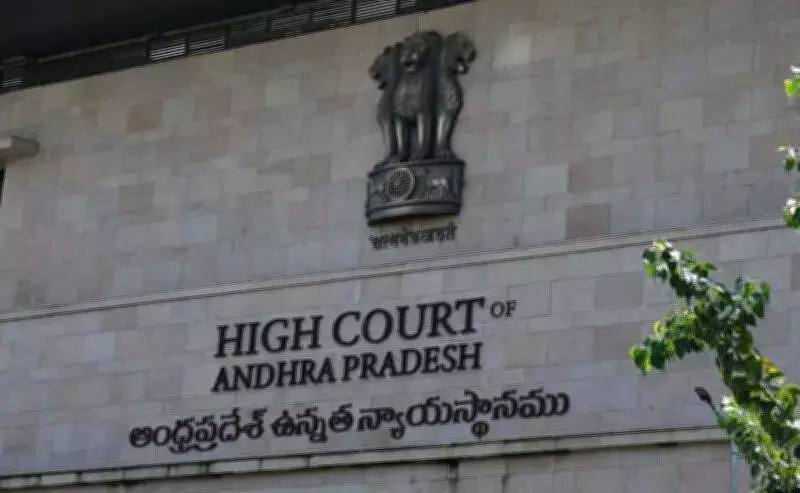
Andhra Pradesh High Court Dismisses PIL Seeking Relocation of Waqf Tribunal
The Andhra Pradesh High Court on Wednesday dismissed a Public Interest Litigation (PIL) that sought directions to shift the Waqf Tribunal from Kurnool to Vijayawada. The court, in its ruling, observed that the majority of cases handled by the tribunal originate from Kurnool, and a significant portion of the Waqf Board's assets are located in and around the city, justifying its current location.
Background and Arguments Presented
The PIL was filed by Mohammad Farood Shubli from Vijayawada, who argued through his counsel MD Saleem that the tribunal was previously situated in Vijayawada before 2019 and was moved to Kurnool in 2021. Saleem contended that since the Waqf Board and other minority welfare organizations are based in Vijayawada, it would be logical to relocate the tribunal there to ensure better accessibility and administrative efficiency.
Government's Stance and Court's Decision
In response, Special Government Pleader S Pranathi represented the state government, stating that a decision had been made to maintain the Waqf Tribunal in Kurnool. Pranathi emphasized that most of the tribunal's cases are from the Kurnool region, and the Waqf Board's assets are predominantly concentrated there. After considering the government's position, the High Court bench, led by Chief Justice Dhiraj Singh Thakur and Justice Challa Gunaranjan, dismissed the PIL, upholding the tribunal's location in Kurnool.

Adjournment of Related Petitions
In a related development, the High Court adjourned hearings on similar petitions that sought to shift the offices of the Human Rights Commission and Lokayukta to Vijayawada. Pranathi submitted that the state government has also decided to keep these offices in Kurnool. She further explained that the staff division between Andhra Pradesh and Telangana remains unresolved, and the appointment of the Lokayukta is expected to occur shortly, pending these administrative adjustments.
Key Points:
- The PIL was dismissed due to the concentration of cases and assets in Kurnool.
- The government argued for continuity in Kurnool to serve the regional majority effectively.
- Similar petitions for other offices were adjourned, with ongoing staff and appointment issues cited.
This ruling underscores the court's reliance on practical considerations, such as case distribution and asset locations, in determining the appropriate venue for judicial and administrative bodies.