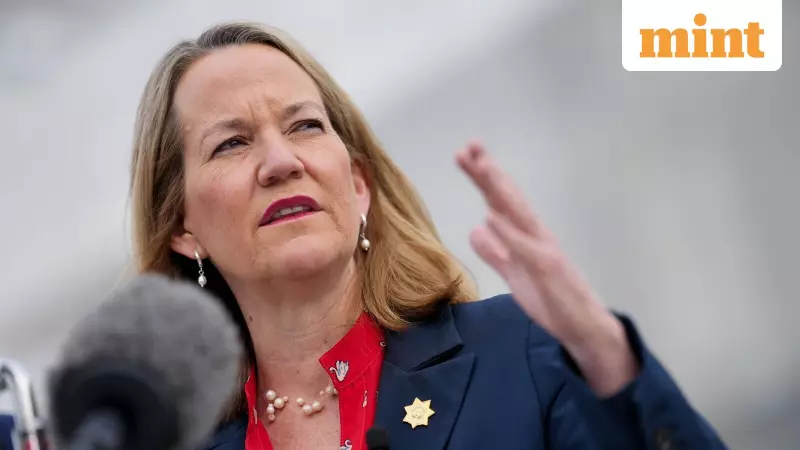
Arizona Attorney General Kris Mayes, a Democrat elected in 2022, has sparked controversy by stating that residents might legally defend themselves against masked Immigration and Customs Enforcement (ICE) agents by shooting them if they perceive their lives to be in immediate danger. This assertion is based on Arizona's self-defense statutes, which include the contentious "Stand Your Ground" law.
Stand Your Ground Law: A Potential Recipe for Disaster
During an interview with 12News, Mayes expressed grave concerns about the potential for violent clashes between demonstrators and immigration enforcement officers. She described the situation as a "recipe for disaster," particularly given the current operations of ICE agents across various areas in Arizona.
"It's kind of a recipe for disaster because you have these masked federal officers with very little identification, sometimes no identification, wearing plain clothes and masks," Mayes stated. She further characterized ICE agents as "very poorly trained," adding to the volatile nature of potential encounters.

Legal Framework for Self-Defense in Arizona
Mayes elaborated on the legal basis for her warning, citing Arizona's "Stand Your Ground" law. This statute permits citizens to use deadly force if they reasonably believe they are facing an imminent threat, especially when on their own property, in their car, or at home.
"And we have a Stand Your Ground law that says that if you reasonably believe that your life is in danger and you're in your house or your car or on your property, that you can defend yourself with lethal force," she explained, as reported by the New York Post.
Clarification Amidst Shock and Criticism
The interview anchor expressed shock at Mayes' statements, warning that they could be interpreted as giving residents a "license" to shoot federal agents. In response, Mayes clarified that she was merely stating a legal fact rather than encouraging violence.
She emphasized the practical difficulties residents might face when confronted by individuals not clearly identifiable as law enforcement officers. "I mean if somebody comes at me wearing a mask, by the way, I'm a gun owner, and I can't tell whether they're a police officer, what am I supposed to do?" Mayes questioned. "No, I'm not suggesting people pull out their guns, but this is a 'Don't Tread On Me' state."
Political Reactions and Legal Implications
Mayes' remarks have drawn sharp criticism from political opponents. US Representative David Schweikert, a Republican from Arizona, labeled her statements as "reckless." In a post on X, the gubernatorial candidate argued that Mayes was irresponsibly describing hypothetical violent scenarios and then downplaying them as mere legal explanations.
"Let's not pretend this was some careful legal seminar," Schweikert stated. He stressed that as the state's chief legal officer, Mayes' words carry significant weight and should not be seen as authorizing violence, even inadvertently.
Meanwhile, Mayes has pledged to take legal action against any ICE agent who violates state law. This commitment follows federal operations in Minnesota that led to widespread unrest, including a fatal incident on January 7 where a protester, Renee Nicole Good, was shot after striking a federal officer with her car during a tense confrontation.
Broader Context and Public Safety Concerns
The attorney general's comments highlight the complex interplay between federal immigration enforcement and state self-defense laws. As ICE agents continue their operations in Arizona, the potential for misunderstandings and violent escalations remains a pressing public safety issue.
Mayes' warning serves as a stark reminder of the legal protections afforded to Arizona residents under the "Stand Your Ground" law, while also underscoring the need for clear identification and proper training among federal officers to prevent tragic outcomes.