Ayodhya Jailbreak Investigation Uncovers Critical CCTV Failure, 15 Officials Suspended
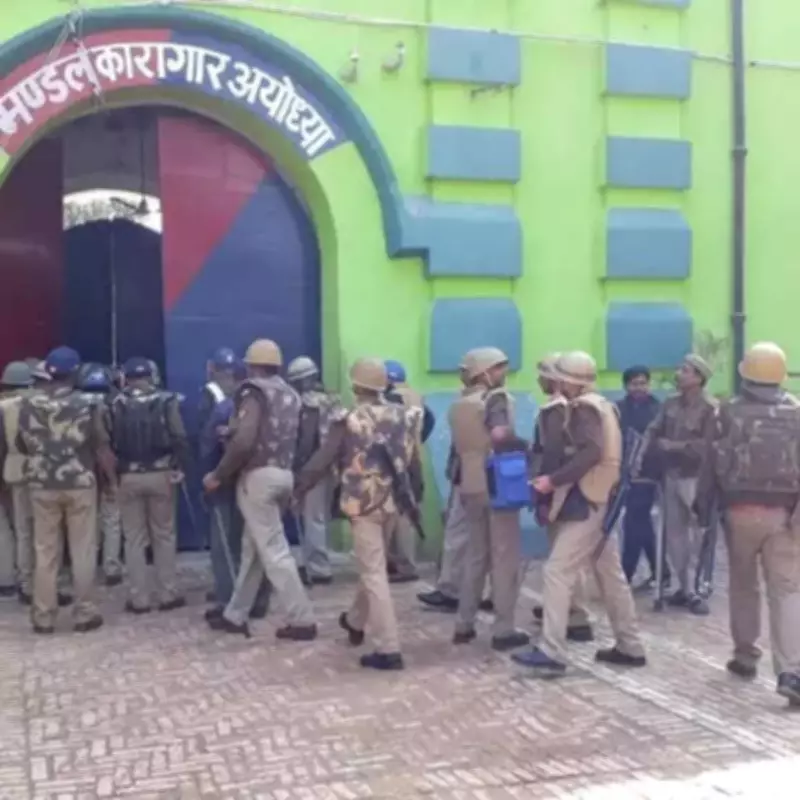
A high-level inquiry into the dramatic escape of two inmates from Ayodhya district jail has exposed severe security lapses, most notably the prolonged failure of crucial CCTV cameras installed on the main boundary wall. The cameras remained completely dysfunctional for nearly 16 hours on the night of the jailbreak, a critical period during which the prisoners made their escape.
Inquiry Report Details Systemic Failures
The damning disclosure was made in the official inquiry report submitted by DIG (Prisons), Ayodhya Range, Shailendra Kumar Maitreya. Following the submission of this report, strict disciplinary action has been initiated against 15 jail officials, including the senior jail superintendent and the jailer, for their gross negligence and dereliction of duty.
The incident occurred on the night of January 28, when two inmates—Golu Agrahari alias Suraj, a resident of Musafirkhana in Amethi district, and Sher Ali from Sultanpur—managed to escape from the high-security barrack of Ayodhya jail. Both prisoners are involved in serious criminal cases, including charges of murder, dacoity, and rape.

Method of Escape and Camera Malfunction
According to the detailed inquiry findings, the inmates first broke through the wall of their barrack, then climbed a nearby tree, and finally scaled the jail's high boundary wall to flee into the night. The investigation revealed that four CCTV cameras installed precisely on the main wall section from which the prisoners escaped were non-functional from 6:30 PM on January 28. They only resumed operation at approximately 10:30 AM the following day.
The DIG's report emphasized a critical point: had the camera been operational, the entire escape sequence would have been captured on footage. This visual evidence would have allowed authorities to determine the exact timing and precise manner of the jailbreak with certainty, potentially aiding in a quicker recapture.
Alarming Oversight and False Records
The camera system remained dysfunctional for over 16 consecutive hours. Most alarmingly, jail monitoring staff failed entirely to notice this critical malfunction throughout the entire night, when security vigilance is paramount. The probe further uncovered that although the jail complex is equipped with 52 CCTV cameras in total, at least four were non-functional at the time of the incident.
Adding to the severity of the lapse, official maintenance and operational records falsely indicated that all cameras were fully functional, masking the actual security vulnerability. The inquiry highlighted that if the monitoring personnel had been even minimally alert, the malfunction—especially of a camera covering the primary boundary wall—should have been detected and reported immediately.
Consequences and Expected Further Action
The DIG's investigation concluded definitively that the suspended officials were guilty of gross negligence, directly contributing to one of the most serious security breaches at Ayodhya jail in recent years. The departmental proceedings against the 15 officials are ongoing, and further administrative or legal action is expected once these proceedings are formally completed. This incident serves as a stark reminder of the consequences of systemic failure in critical security infrastructure.