Bangladesh Prime Minister Front-Runner Dismisses Unity Government Proposal
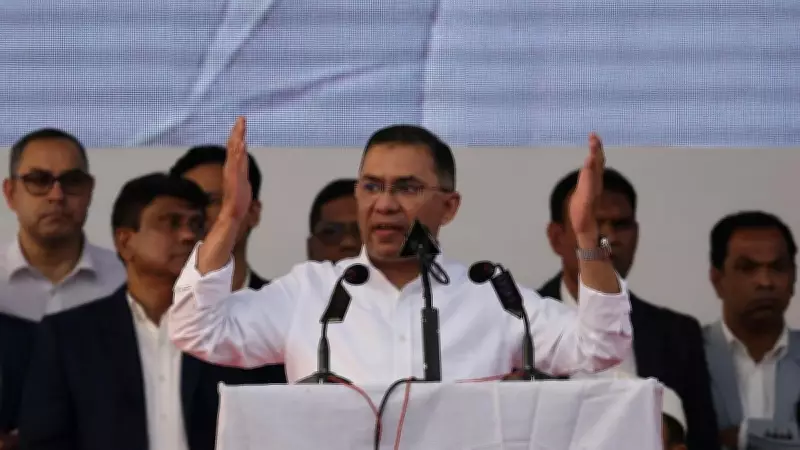
In a significant political development ahead of the February 12 election, the front-runner for Bangladesh's prime minister has firmly rejected an offer to form a unity government. The candidate, representing the main opposition party, declared that his political faction is poised to secure a decisive victory in the upcoming polls, dismissing the need for any coalition arrangement.
Election Dynamics and Key Rivalry
The political landscape in Bangladesh is heating up as the election date approaches. The Bangladesh Nationalist Party (BNP), led by former Prime Minister Khaleda Zia, faces a formidable challenge from the Islamist group Jamaat-e-Islami. This group, which was once banned from political activities, has experienced a resurgence and is now positioned as the primary rival to the BNP in the electoral contest.
Jamaat-e-Islami's renewed political presence adds a complex layer to the election, with its ideology and historical context influencing voter sentiments. The rejection of the unity government offer underscores the confidence of the BNP leadership in their electoral strategy and grassroots support.
Confidence in Victory and Political Strategy
The front-runner's statement reflects a bold assertion of political strength, suggesting that the BNP has mobilized effectively across Bangladesh. By turning down the unity government proposal, the candidate signals a commitment to pursuing an independent mandate, potentially aiming to implement policies without the compromises that often accompany coalition governments.
This move may also be a tactical decision to appeal to core supporters who prefer a clear political direction over negotiated alliances. As the election campaign intensifies, the focus is likely to shift to key issues such as governance, economic development, and social policies, with both major parties vying for the electorate's trust.
Historical Context and Future Implications
The involvement of figures like Khaleda Zia and references to Nobel laureate Muhammad Yunus highlight the deep-rooted political narratives in Bangladesh. The resurgence of Jamaat-e-Islami, after periods of prohibition, indicates shifting political alignments and the evolving role of religion in the country's democracy.
As Bangladesh prepares for this critical election, the rejection of unity government talks sets the stage for a highly competitive race. The outcome could have significant implications for regional stability, international relations, and domestic policy directions. Observers will be closely monitoring the campaign dynamics and voter turnout to gauge the future trajectory of Bangladeshi politics.