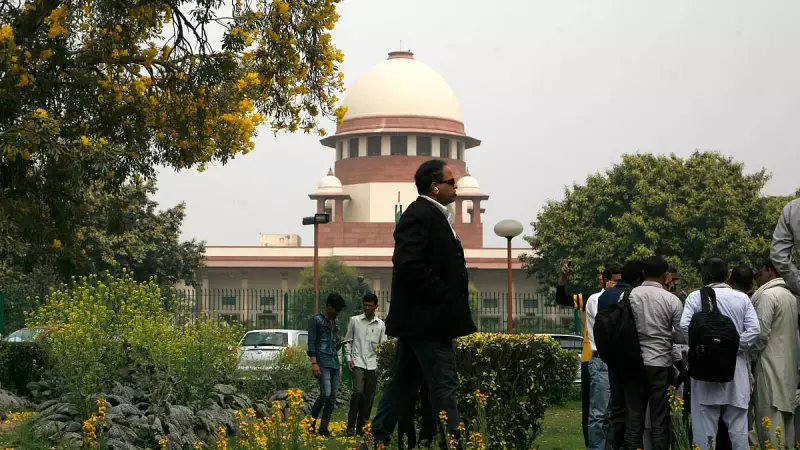
A concerning practice known as 'bench hunting' is raising alarms within India's legal corridors, posing a direct threat to the Supreme Court's foundational role as the ultimate interpreter of the law. This trend, where litigants seek quick reversals of orders by approaching different benches of the court, challenges the very principle of judicial finality and stability.
What is 'Bench Hunting' and How Does it Work?
The mechanism of 'bench hunting' is straightforward yet deeply problematic. After receiving an unfavorable order or judgment from one bench of the Supreme Court, parties swiftly approach a different bench, often through a miscellaneous application or a fresh plea, seeking an urgent stay or reversal. This tactic exploits the court's vast size and the existence of multiple benches hearing diverse matters daily. The core issue is that it allows litigants to effectively 'forum shop' within the same highest court, undermining the authority of a coordinate bench.
Legal experts point out that this practice disrupts the established hierarchy and sanctity of the court's own decisions. When a bench of the Supreme Court passes an order, it is expected to be respected by all, including other benches of the same court, barring a review or curative petition heard through proper procedure. The trend of quick, sometimes overnight, reversals through a different judicial corridor bypasses these disciplined channels, creating uncertainty and inconsistency in the law.

The Erosion of the Supreme Court's Supreme Authority
The immediate consequence of this trend is the dilution of the Supreme Court's stature as the final arbiter. If its own orders are not treated as final within its precincts, the confidence of the lower judiciary and the public in the stability of legal pronouncements diminishes. The role of the Supreme Court under the Constitution is to provide a definitive conclusion to legal disputes, ensuring a uniform rule of law across the nation. 'Bench hunting' fragments this finality, leading to a scenario where the law becomes unpredictable based on which bench a matter is listed before.
This practice also places immense pressure on judges. Benches approached for such reversals are put in a difficult position, having to weigh the merits of an appeal against another bench's order without the full context of a formal review. It can lead to public perceptions of internal discord or differing standards within the apex court, which damages institutional credibility.
Seeking Solutions for Judicial Stability
Addressing this challenge requires both institutional introspection and procedural rigor. One potential solution lies in strengthening internal mechanisms. The Chief Justice of India, as the master of the roster, can play a pivotal role in ensuring that matters seeking to overturn or stay another bench's order are strictly listed before the same bench or a larger bench for consideration. A more robust internal protocol is needed to prevent the circumvention of standard review processes.
Furthermore, the legal fraternity, including senior advocates, has a responsibility to discourage such tactics. Upholding the decorum and finality of the court's orders is essential for the health of the democracy. The Supreme Court must remain a pillar of certainty, not a maze of benches where outcomes can be shopped for. Curbing 'bench hunting' is not just about procedural propriety; it is about preserving the integrity of India's judicial system and the trust of its citizens in the rule of law.