

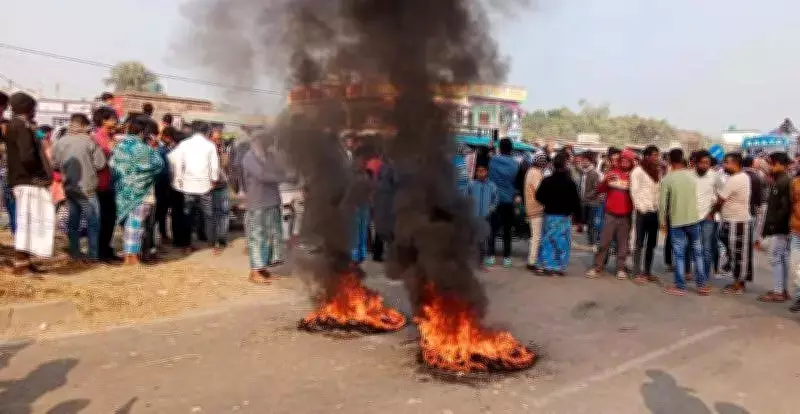
The West Bengal government on Friday withdrew its petition challenging the National Investigation Agency (NIA) probe into the Beldanga case, which was pending before a division bench headed by Chief Justice Sujoy Paul.
The Trinamool Congress-led government had filed the petition concerning the alleged rioting that occurred at Murshidabad's Beldanga in January 2026. Considering the change in government in May, the Chief Justice had inquired whether the state would maintain its stance of opposing the central agency's investigation. The bench will now hear the case on June 30, along with other petitions filed in this matter.
State's Argument Against NIA Probe
Bengal's challenge was based on the argument that the NIA can only investigate "Scheduled Offences"—crimes that threaten national security and sovereignty, involve terrorism, counterfeit currency, or cyber-terrorism. The state had argued that the Beldanga incident was a case of rioting and, therefore, a local law-and-order issue.

The NIA had invoked Section 15 of the Unlawful Activities Prevention Act (UAPA)—a "Scheduled Offence" under the NIA Act—labeling the localized rioting as "economic terrorism." The Supreme Court subsequently directed the Calcutta High Court to examine this specific issue.
Bail Granted in Mothabari Incident
Meanwhile, a special NIA court in Kolkata on Thursday granted bail to two individuals, including the main accused and lawyer Mofakkerul Islam, who were arrested for allegedly confining judicial officers in Malda's Mothabari. On April 1, an agitated crowd confined seven judges, who were engaged in Special Intensive Revision work, at the Kaliachak-II block office. The incident sparked widespread tension, leading to road blockades in various areas, including Mothabari and Sujapur.
The Supreme Court had ordered an NIA probe into the incident. The NIA has submitted charge sheets in four cases related to the Mothabari incident. The charge sheets name 31 individuals, including Mofakkerul Islam.






