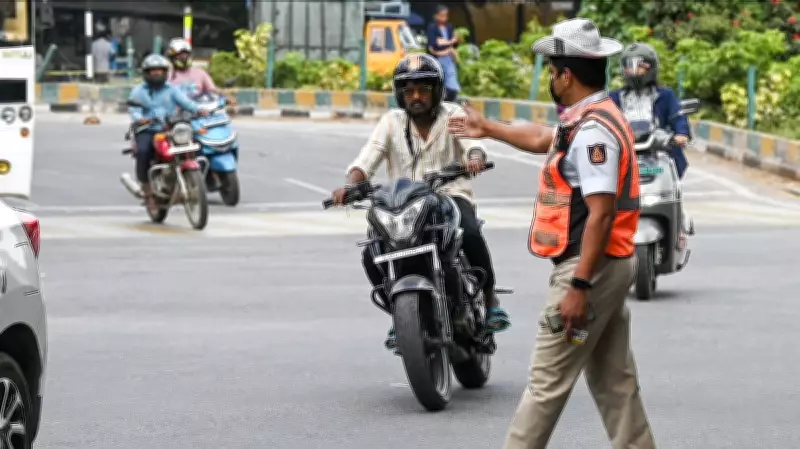
Bengaluru Traffic Enforcement Sees Sharp Rise in Manual Cases
In a surprising trend for India's tech hub, Bengaluru has witnessed a significant increase in traffic cases filed manually by enforcement personnel on the ground, despite a broader push for automated, camera-based systems. Data reveals a dramatic shift in how violations are being recorded in the city.
Steady Climb in Contact-Based Cases
The statistics tell a compelling story. In 2023, only 2.7% of all traffic cases in Bengaluru were registered through direct contact by personnel. This figure more than doubled to 5.8% in 2024, and then surged further to reach 12.14% by 2025. This steady climb indicates that the number of cases recorded by officers physically present at locations has increased substantially over these years.
This rise in manual enforcement comes amid ongoing efforts to leverage technology for traffic management. Bengaluru, known for its traffic congestion and as a center of technological innovation, has invested in camera-based systems to automatically detect violations such as speeding, red-light jumping, and illegal parking. The intention has been to enhance efficiency, reduce human error, and ensure consistent enforcement across the city.

Implications for Traffic Management Strategy
The increasing proportion of contact-based cases suggests several possible factors at play. It may reflect a strategic decision by traffic police to bolster on-ground presence in specific high-violation zones or during peak hours. Alternatively, it could point to limitations or challenges in the full deployment or effectiveness of automated camera systems in certain areas.
This trend raises important questions about the balance between technological solutions and human oversight in urban traffic management. While automated systems offer scalability and objectivity, manual enforcement allows for immediate intervention, handling of complex situations, and direct engagement with violators, which can have a deterrent effect.
The data, current as of February 2026, highlights an evolving enforcement landscape in Bengaluru. Authorities may be adopting a hybrid approach, using technology for broad coverage while deploying personnel for targeted, responsive actions. This could be part of a nuanced strategy to address the city's persistent traffic woes more comprehensively.
As Bengaluru continues to grow, monitoring this balance between tech-driven and manual traffic case filings will be crucial for assessing the overall effectiveness of road safety measures and planning future investments in urban mobility infrastructure.