

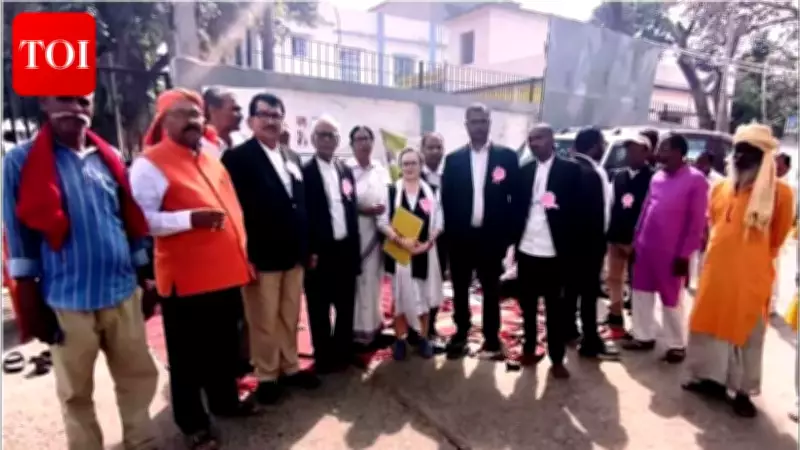
Bhagalpur Lawyers' 101-Day Dharna Demands High Court Bench After 59-Year Struggle
The long-standing demand for establishing a high court bench or circuit bench in Bhagalpur has resurfaced with renewed intensity as lawyers and social activists, organized under the Uchcha Nyayalaya Sangharsh Samiti (UNSS), marked their 101st consecutive day of dharna and demonstrations on Thursday. This persistent protest highlights a judicial issue that has remained unresolved for nearly six decades, dating back to 1967, despite numerous appeals and representations over the years.
Historical Context and Current Protests
The lawyers attribute the failure to fulfill their 59-year-old demand to a lack of interest at the state government level, particularly in pursuing the matter with the central government and appropriate judicial forums. The District Bar Association (DBA), which was established in 1881, initially passed a resolution on November 11, 1967, calling for a high court bench in Bhagalpur. This historical resolution underscores the deep-rooted nature of the demand, which has been a focal point of legal advocacy in the region for generations.
Protesters emphasize Bhagalpur's historical significance as a judicial center since 1774, arguing that this legacy justifies the establishment of a high court bench to serve the local population more effectively. The ongoing dharna, led by the District Bar Association, aims to draw attention to what they perceive as governmental neglect and bureaucratic delays in addressing their long-pending request.

Government Response and Judicial Hurdles
In January 2024, Union Law Minister Arjun Ram Meghwal stated that new high court benches could only be considered after receiving recommendations from the Chief Justice of the high court and the Chief Minister. He further noted that such demands are losing relevance due to the expansion of e-courts, which aim to digitize and streamline judicial processes across India. This statement has been met with criticism from the protesting lawyers, who argue that technological advancements should complement, not replace, physical judicial infrastructure to ensure accessible justice for all citizens.
The lawyers' protest highlights broader issues within the Indian judiciary, including delays in decision-making and the challenges of balancing modernization with traditional judicial needs. The 101-day dharna serves as a stark reminder of the persistent gaps in judicial accessibility, particularly in regions like Bhagalpur, where residents have long advocated for enhanced legal facilities.
Implications and Future Outlook
The continuous demonstrations by Bhagalpur lawyers underscore the urgency of addressing this 59-year-old demand, which has implications for judicial efficiency and public trust in the legal system. As the protest enters its 101st day, it raises questions about the effectiveness of state and central government mechanisms in responding to long-standing regional grievances. The outcome of this struggle could set a precedent for similar demands in other parts of India, influencing how judicial infrastructure is planned and implemented in the future.
In summary, the Bhagalpur lawyers' dharna represents a critical juncture in the ongoing battle for judicial reform, blending historical context with contemporary advocacy to push for a high court bench that has been sought for over half a century.






