

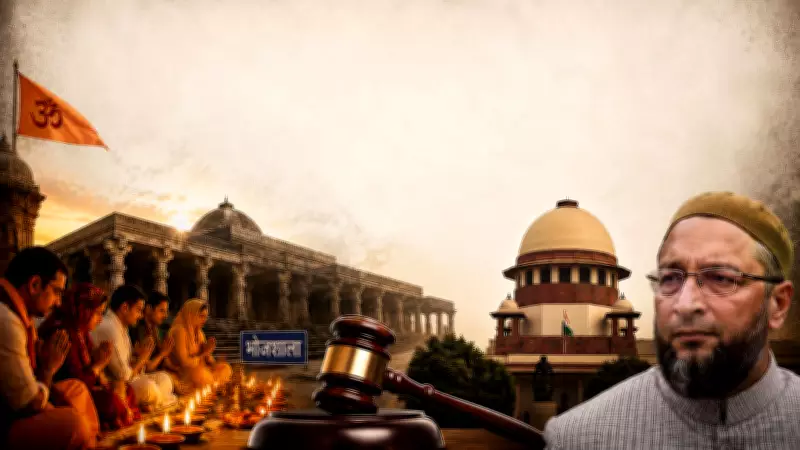
The Bhojshala-Kamal Maula dispute has once again reached the national spotlight after the Muslim side challenged the Madhya Pradesh High Court verdict in the Supreme Court. The High Court recently declared the disputed Bhojshala complex in Dhar as a temple dedicated to Goddess Saraswati and struck down the 2003 ASI arrangement permitting Friday namaz at the site.
Supreme Court Challenge
Muslim petitioners have now approached the apex court, alleging that the ASI survey relied upon by the High Court was flawed and that the dispute should have been decided through a detailed civil trial. The petitioners argue that the High Court overstepped its jurisdiction by ruling on the religious nature of the site without proper evidence.
Legal and Political Reactions
The verdict has sparked political reactions, with various parties weighing in on the implications for the Places of Worship Act, 1991. Legal experts have debated whether the High Court's decision sets a precedent for similar disputes across the country. The ruling has also led to heightened security in Dhar after namaz was halted at the site for the first time in over two decades.

- The High Court declared the Bhojshala complex a temple dedicated to Goddess Saraswati.
- The 2003 ASI arrangement allowing Friday namaz was struck down.
- Muslim petitioners challenge the verdict in the Supreme Court, citing flawed ASI survey.
- The dispute raises questions about the Places of Worship Act and its applicability.
The case is expected to be heard by the Supreme Court in the coming weeks, with both sides preparing for a prolonged legal battle. The outcome could have far-reaching implications for religious sites across India.






