

Bhopal Grapples with Escalating Mobile Phone Snatching Crisis
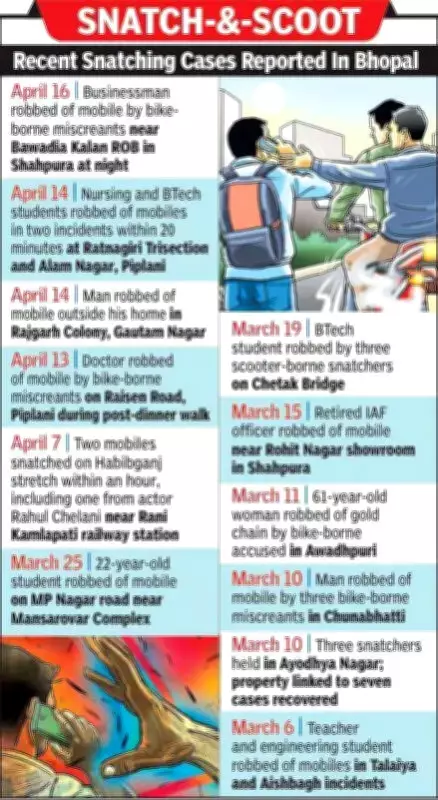
The state capital of Madhya Pradesh, Bhopal, is currently facing a significant and concerning rise in snatching incidents, with a particular focus on mobile phone thefts. Over the past month, more than a dozen such cases have been reported, sparking alarm among residents and raising serious questions about urban safety and the effectiveness of local law enforcement efforts.
Widespread Incidents Across Multiple Neighborhoods
What makes this trend especially troubling is its broad geographic spread. No longer confined to isolated or high-risk areas, snatching incidents have now infiltrated upscale residential colonies and bustling commercial zones. Affected localities include Piplani, Govindpura, Bag Sewania, Shahpura, Habibganj, Chunabhatti, MP Nagar, Aishbagh, Talaiya, and Gautam Nagar, indicating a city-wide pattern that demands immediate attention.
Police Response and Operational Challenges
Law enforcement authorities have acknowledged the issue, claiming success in solving several recent cases. They deny the involvement of any organized criminal racket, attributing the crimes to disparate individuals rather than a single gang. However, the frequency and dispersion of incidents continue to highlight potential gaps in deterrence and patrol coverage.

In a notable crackdown, Habibganj police arrested three snatchers, along with a middleman and a mobile repair shop owner, recovering five snatched mobile phones. This action reveals a small but active network facilitating such crimes, where stolen devices are dismantled and parts sold illicitly.
FIR Registration Issues Under New Legal Framework
Despite the introduction of a dedicated section for snatching under the Bhartiya Nyay Sanhita (BNS), which came into effect on July 1, 2024, police reluctance to file proper complaints has been observed. In a recent incident in Shahpura, a 42-year-old businessman had his mobile phone snatched by bike-borne miscreants, but police initially registered it as a lost mobile complaint instead of a snatching case. Only after intervention from the Police Commissioner was an FIR filed.
Under the BNS, snatching cases are now classified under Section 304, categorizing them as theft rather than the more severe loot cases under the previous Indian Penal Code (IPC). This shift alters the procedural and legal weight attached to such incidents, potentially impacting monitoring and punitive measures.
Modus Operandi and Criminal Networks
Investigations have uncovered that hardcore criminals, particularly from areas like Aman Colony, are exploiting vulnerable minors and youngsters to carry out snatchings. These masterminds provide two-wheelers on rent, instruct targets on how to approach pedestrians using phones, and pay between Rs 1,000 to Rs 5,000 per snatched device. The financial incentive makes it appealing for youths, who can meet daily expenses with just one or two thefts.
These criminals have established networks extending to other states such as Karnataka and Maharashtra, and even along the Nepal border, where snatched phones are supplied and sold. Although police operations in Aman Colony have somewhat curbed their activities, the persistence of such networks underscores ongoing challenges.
Enhanced Police Measures and Surveillance
In response to the crisis, Police Commissioner Sanjay Kumar has announced intensified patrolling, especially during peak hours from 6 pm to 10 pm when most incidents occur. Surveillance on habitual offenders with snatching histories has been increased, and preventive actions are being implemented. Additionally, efforts are underway to expand the number of CCTV cameras across the city and identify stretches with poor lighting at the police station level.
As Bhopal residents navigate this surge in crime, the combined focus on law enforcement strategies, legal adaptations, and community vigilance will be crucial in restoring a sense of security and deterring future incidents.






