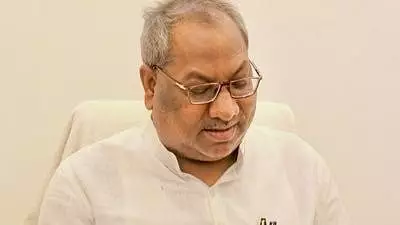
A Delhi court on Saturday convicted Raju Kumar Singh, the Bharatiya Janata Party (BJP) MLA from Sahebganj in Muzaffarpur, Bihar, in connection with an eight-year-old New Year party firing case that resulted in the death of a woman, Dr Archana Gupta. Special judge Vishal Gogne of the Rouse Avenue court found Singh guilty of culpable homicide not amounting to murder under the Indian Penal Code (IPC) and under the Arms Act. The court ordered him to be taken into custody immediately.
Acquittals and Sentencing Schedule
Singh's wife, Renu Singh, along with two other accused, Rana Rajesh Singh and Ramendra Singh, who were charged with destruction of evidence, were acquitted by the court. The court will hear arguments on the sentence on June 9, 2025.
Details of the Incident
The case pertains to celebratory firing during a New Year party held on December 31, 2018, at a farmhouse in Fatehpur Beri, Delhi. During the festivities, Dr Archana Gupta was struck by a bullet in the head. She succumbed to her injuries in the hospital on January 3, 2019.

Government Compensation and Disparities
During the period, the state government disbursed Rs 5.1 crore in compensation to families of victims of pesticide-related deaths. However, the payouts varied significantly across districts, highlighting gaps between reported fatalities and cleared claims. Bikaner received Rs 92 lakh in compensation, Churu Rs 72 lakh, Jodhpur Rs 58 lakh, and Hanumangarh Rs 48 lakh. Sriganganagar received Rs 18 lakh. Jhalawar, despite reporting 42 deaths, also received only Rs 18 lakh. Deeg reported eight deaths but received no compensation, while Kota reported 11 deaths and received Rs 2 lakh.
Officials' Explanations
Officials attributed the disparities to claim verification and approval processes. The agriculture department records did not specify the exact cause of each death. The data covered fatalities linked to pesticide use during agricultural work and included only cases reported and verified by authorities.
Political Reaction
“If hundreds of farmers are dying while carrying out routine agricultural work, the government cannot wash its hands of responsibility by merely paying compensation. We need accountability, stricter regulation of pesticides, and a comprehensive safety programme for farmers across Rajasthan,” said Kishanpole MLA Amin Kagzi.
Pesticide Quality Concerns
The death count surfaced alongside another set of numbers from the assembly: 189 pesticide samples failed quality tests over the same two-year period. Of 5,570 pesticide samples collected across Rajasthan, 5,521 were analysed. While 5,332 met the prescribed standards, 189 were found substandard.
Enforcement Actions
Authorities issued 282 notices, filed 14 court cases, suspended 14 licences, and cancelled 22 licences following quality checks. Sriganganagar and Hanumangarh topped the list of substandard pesticide samples at 17 each, followed by Bikaner (13), Kota (10), and Bhilwara (9). Sriganganagar also recorded the highest number of notices at 34, followed by Bikaner (20), Hanumangarh (19), and Churu (17). Legal action was launched in 14 cases, including five in Bikaner and three in Sriganganagar.
Broader Implications
The figures paint a stark picture of pesticide risks in India. Heavy dependence on chemical pesticides has long been a pillar of high-yield farming, but experts have repeatedly warned that inadequate protective gear, unsafe handling practices, excessive spraying, and poor-quality agrochemicals can turn fields into toxic workplaces. Beyond human health risks, pesticide overuse has been linked to soil degradation, water contamination, biodiversity loss, and declining populations of pollinators and beneficial insects.
Government Response
State agriculture minister Kirori Lal Meena sought to play down the figures, stating that data compiled from police stations by the home department would be reviewed.