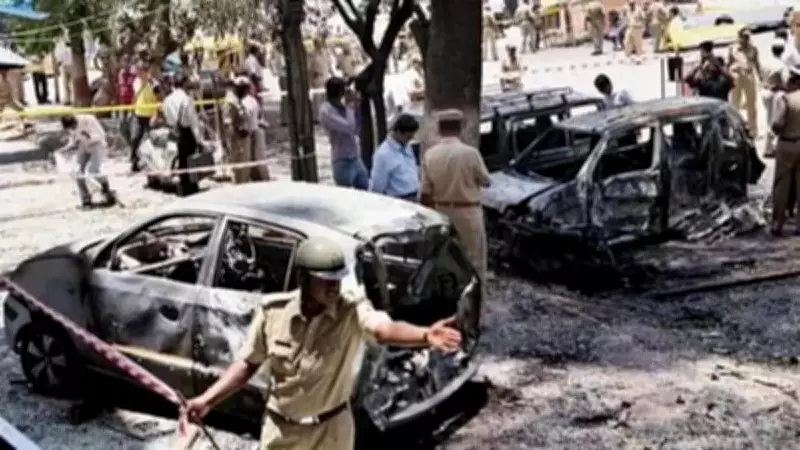
Bombay High Court Clears Four Accused in Malegaon Blast Case, Drops All Charges
In a landmark legal decision, the Bombay High Court has discharged four individuals accused in the Malegaon blast case, effectively quashing all charges against them. The ruling, delivered on April 22, 2026, brings a dramatic turn to the long-standing investigation that has spanned years.
Details of the Charges and Court's Ruling
The four accused were initially charged under multiple sections of the Indian Penal Code (IPC), including those related to murder and criminal conspiracy. Additionally, they faced charges under the stringent Unlawful Activities (Prevention) Act (UAPA), which is often invoked in cases involving terrorism or threats to national security.
The court's decision to discharge the accused means that all these charges have been set aside, citing insufficient evidence or procedural grounds. This move highlights the judiciary's role in scrutinizing legal frameworks and ensuring due process in high-profile cases.

Background of the Malegaon Blast Case
The Malegaon blast case dates back to a series of incidents that shook the region, leading to extensive investigations and multiple arrests over the years. The case has been a focal point in discussions about national security, legal procedures, and the application of laws like UAPA in India.
With this ruling, the Bombay High Court has addressed key aspects of the prosecution's arguments, potentially setting precedents for future cases involving similar charges. Legal experts suggest that this decision could influence how courts interpret evidence and apply stringent laws in complex criminal matters.
Implications and Reactions
The discharge of the four accused is expected to have significant implications for the ongoing legal proceedings related to the Malegaon blast. It may lead to renewed debates on the effectiveness of anti-terror laws and the balance between security measures and individual rights.
Reactions from various quarters are anticipated, with some viewing the ruling as a victory for justice and others expressing concerns about its impact on national security efforts. The case continues to be closely monitored by legal analysts, policymakers, and the public alike.
As the legal landscape evolves, this decision underscores the importance of judicial oversight in ensuring that charges are substantiated with concrete evidence, upholding the principles of fairness and legality in the Indian judicial system.