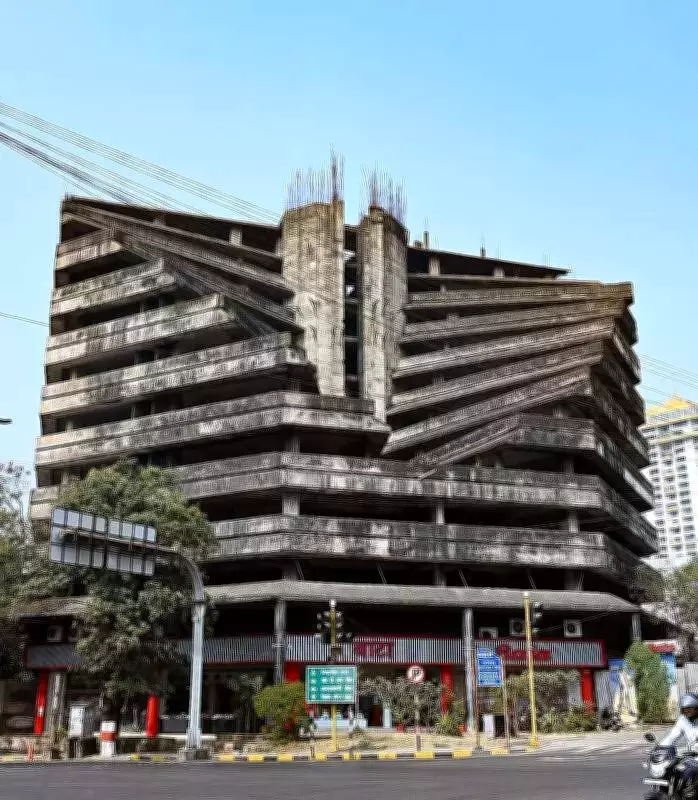
Nagpur Bench of Bombay High Court Upholds Demolition Orders for Illegal Constructions
The Nagpur Bench of the Bombay High Court delivered a significant ruling on Tuesday, dismissing multiple petitions that challenged the Nagpur Municipal Corporation's (NMC) demolition actions against illegal constructions in two prominent structures: Poonam Towers and Poonam Chambers. The court firmly upheld the civic body's authority, marking a decisive moment in the ongoing legal battle over unauthorized building activities in the city.
Court Dismisses Petitions and Grants Limited Vacate Time
In a comprehensive hearing, the division bench comprising Justices Anil Pansare and Nivedita Mehta dismissed petitions filed by N Kumar, the owner of Poonam Towers and Poonam Chambers. These petitions contested the NMC's demolition directives and actions. Additionally, the court dismissed separate petitions filed by businessman Vijay Babhre, Vinod Duseja, and others against a show-cause notice issued by the NMC on January 30, 2026. This notice demanded the vacation of shops built on illegal constructions within Poonam Chambers.
The court's dismissal specifically targeted challenges to NMC notices dated January 13 and January 30, 2026, which ordered the removal of illegal constructions and the vacation of shops. While affirming the NMC's actions, the bench demonstrated a measure of leniency by agreeing to grant limited time to shop owners in Poonam Chambers to vacate their premises. The court clarified that detailed reasons for the dismissal would be provided in a written judgment, expected to be released shortly.

Owner's Conditional Offer and Court's Firm Response
N Kumar, who represented himself in court, presented a conditional proposal to the bench. He expressed willingness to demolish Poonam Towers independently but sought a precondition that his revised plan for the site must be approved first. The court reprimanded Kumar, making it unequivocally clear that judicial proceedings do not operate on his personal terms. Despite this, the court formally recorded Kumar's commitment to demolish the building within a two-month timeframe.
During the proceedings, Kumar claimed possession of all necessary documents, a statement he reiterated from previous hearings. However, the court repeatedly requested him to present the approved building plan to substantiate his claim. Noting that he failed to submit even a single official document, the court dismissed his assertions, highlighting a lack of evidence to support his case.
Emotional Pleas and Legal Arguments in Poonam Chambers Case
In the Poonam Chambers case, Kumar made an emotional appeal to the court, questioning, "Will you come one day and demolish a 35-year-old building? I will be ruined, the NMC doesn't listen to me, if you also won't listen, should I commit suicide?" The bench expressed strong displeasure at this argument, admonishing Kumar with the statement, "Don't make such arguments in court." Following repeated pleas, Kumar eventually agreed to remove the illegal constructions in Poonam Chambers. The court directed him to submit a written undertaking to this effect by 4:30 PM on Tuesday.
Legal Representation and Government's Stance
The hearing featured representation from several legal professionals. Advocate General Milind Sathe appeared for the state, while advocate Gemini Kasat represented the Nagpur Municipal Corporation. Advocates Shyam Dewani and Sahil Dewani represented the shop owners affected by the demolition orders.
Advocate General Sathe articulated the government's position, stating that if proper legal procedures had been followed initially, the constructions could have been regularized. However, since the case did not meet the necessary criteria, regularization was not feasible. This underscored the importance of adherence to building regulations and legal frameworks in urban development.
The court's ruling reinforces the authority of municipal bodies in enforcing construction laws and highlights the legal consequences of unauthorized building activities. It serves as a precedent for similar cases involving illegal constructions in urban areas, emphasizing the judiciary's role in upholding civic regulations.