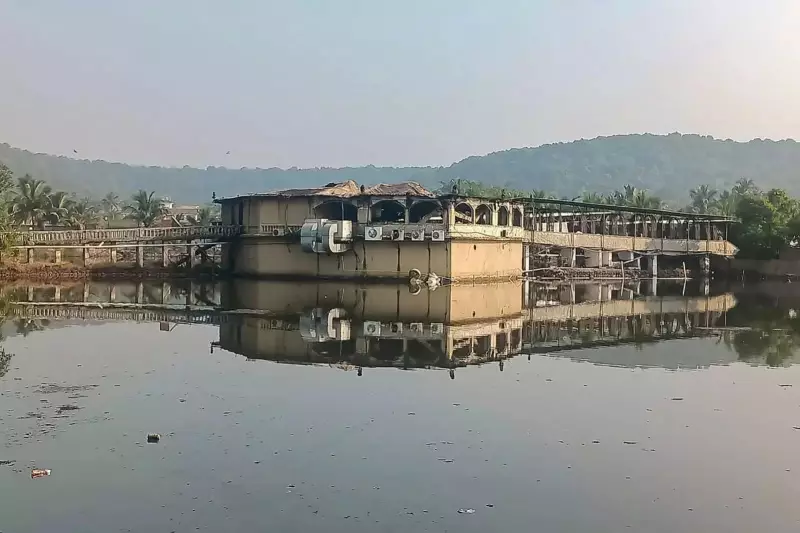
The Bombay High Court has taken a decisive step in the aftermath of the tragic fire at an Arpora nightclub that claimed 25 lives. On Monday, the court directed the registration of a suo motu Public Interest Litigation (PIL) to investigate the broader systemic issue of commercial operations being permitted in illegal structures across the state of Goa.
Court Directs State Government to File Response
A division bench comprising Justices Sarang V Kotwal and Ashish S Chavan presided over the matter. The bench explicitly instructed the Goa state government to file a detailed response in the newly registered suo motu PIL. The court's directive focuses on identifying corrective measures and determining whether specific officers or authorities can be held accountable to prevent such disasters in the future.
From the arguments presented, the high court made a critical observation. It stated that the core "problem lies in the construction of illegal structures and indiscriminate grant of licences." The bench pointed out a significant enforcement gap, noting that while local laws empower municipal bodies to take action against such violations, these provisions often remain unimplemented, turning into "dead letters in the statute books."

A Cycle of Violations and Stay Orders
The court elaborated on the problematic cycle that enables such tragedies. It noted that in many instances, even when local bodies pass demolition orders against illegal constructions, these orders are frequently stayed by appellate authorities. Commercial activities continue unabated in these illegal structures, exploiting the protection of stay orders. In other cases, the court highlighted the paradox of licences being granted for commercial businesses operating from buildings that are themselves illegal.
"All this has led to a very serious issue in the state of Goa," the high court remarked, underscoring the gravity of the situation. The bench issued a clear call for coordinated action, stating, "It is necessary that the authorities must work together proactively to address these issues rather than shifting the blame on each other." The court urged all parties to approach the matter in a non-adversarial spirit, considering its widespread impact on society.
Assigning Accountability and Appointing Amicus Curiae
At this preliminary stage, the court emphasized the urgent need to assign clear accountability to authorities to prevent a recurrence of such incidents. To assist in the proceedings, the high court appointed advocate Rohit Bras de Sa as amicus curiae. The bench clarified that while it was hearing a specific petition between two private parties, it was exercising its authority to take suo motu cognisance of the larger, grave issue of illegal commercial structures.
"For this purpose, we direct the registry to register a suo motu PIL," the court ordered. This directive came during the hearing of a petition filed by Pradeep Amonkar and Sunil Divker. Their petition sought the implementation of demolition orders against structures at Birch by Romeo Lane and challenged a Goa Coastal Zone Management Authority order from November 21, 2025, which had discharged a show-cause notice and concluded it had no jurisdiction in that particular matter.
The court's intervention marks a pivotal move towards systemic reform, aiming to dismantle the nexus of illegal construction, lax licensing, and poor enforcement that culminated in the Arpora disaster.