

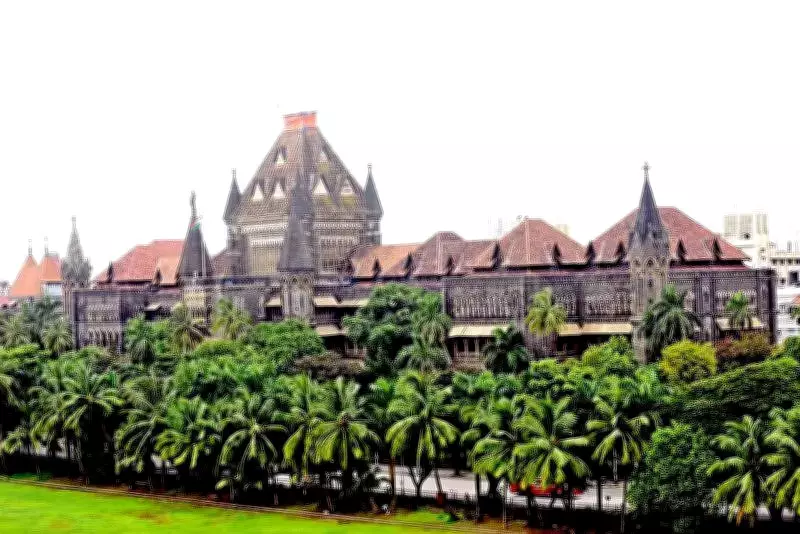
Bombay High Court Mandates Action Against Unauthorized Hawkers in Goregaon
The Bombay High Court issued a significant directive on Wednesday, ordering the Brihanmumbai Municipal Corporation (BMC) and the Maharashtra state government to take immediate and decisive action against illegal hawkers operating in the Goregaon suburb. The court has demanded that authorities file a compliance affidavit detailing the measures taken to address this longstanding issue.
Petition by Licensed Shopkeepers Association
The court's intervention came in response to a public interest litigation (PIL) filed by the Goregaon Merchants Association, representing licensed shopkeepers who have been severely impacted by the proliferation of unauthorized street vendors. The association, represented by advocate Bahraiz Irani, presented compelling arguments that illegal hawkers are not only encroaching upon their legitimate business but have also created an environment of intimidation and physical threat.
The licensed shopkeepers have documented numerous incidents of harassment and obstruction, with the PIL specifically mentioning stone-pelting attacks on association joint secretary Firdaus Irani's car in 2020 and 2025, along with systematic encroachment upon shop verandas during 2024-2025.

Court's Comprehensive Approach to Hawker Management
The division bench, presided over by Justice A S Gadkari, is concurrently hearing multiple petitions related to hawker management in Mumbai. This includes a 2023 suo motu PIL that examines broader strategies for addressing pavement obstruction and implementing effective vendor regulation systems.
Advocate Jamshed Mistry, serving as amicus curiae (friend of the court) in the suo motu PIL, emphasized the BMC's statutory obligation to enforce the 2014 Street Vendors' Act. This legislation mandates the establishment of proper committees and implementation of structured vending schemes to balance the rights of legitimate vendors with urban management concerns.
Police Accountability and Enforcement Mechanisms
The High Court delivered specific instructions to law enforcement agencies, directing the police to outline their proposed action plan regarding numerous complaints filed against illegal hawkers over the years. The court specifically questioned whether authorities had considered invoking externment provisions against repeat offenders.
Advocate Irani presented a comprehensive compilation of approximately 150 complaints submitted since 1996, including those filed by local corporators, demonstrating the persistent nature of the problem. While government pleader Purnima Kantharia expressed practical limitations in registering every individual complaint, the court maintained that systematic enforcement of existing legal provisions was essential.
Historical Context and Ongoing Challenges
The Goregaon hawker issue represents a microcosm of Mumbai's broader urban management challenges. Licensed shopkeepers have been raising concerns for nearly three decades, with documented complaints beginning in 1996. The current legal proceedings build upon previous court directives, including earlier instructions to the BMC regarding Town Vending Committee election results for Mumbai.
The court's latest directives signal a more rigorous approach to urban governance, balancing the need for livelihood opportunities with the rights of established businesses and pedestrian access. The compliance affidavit requirement ensures accountability from municipal and state authorities, while the police action plan demand addresses law enforcement's role in maintaining public order and safety.
This judicial intervention comes at a critical juncture as Mumbai continues to grapple with the complex interplay between informal street vending, formal retail businesses, and urban infrastructure management. The High Court's comprehensive approach suggests a recognition that sustainable solutions require coordinated action across multiple government agencies and enforcement of existing legislative frameworks.






