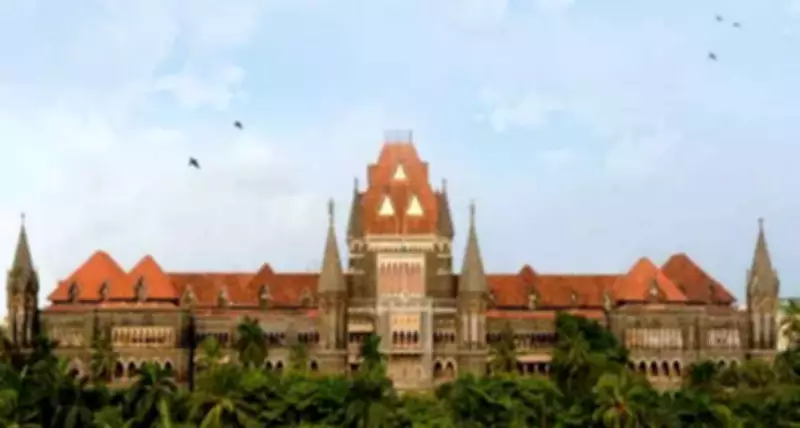
Bombay High Court Slams MSRTC, Orders Rs 45 Lakh Compensation for Covid Victim's Widow
The Bombay High Court has delivered a stern rebuke to the Maharashtra State Road Transport Corporation (MSRTC) for its refusal to grant Rs 50 lakh in compensation to the widow of an employee who succumbed to Covid-19. The court has mandated the corporation to pay the remaining Rs 45 lakh, after adjusting an earlier payment of Rs 5 lakh, within a strict eight-week deadline.
Judicial Intervention Overturns MSRTC's Rejection
Justices Makarand Karnik and Shriram Modak, presiding over the bench on Tuesday, allowed the petition filed by Sunita Jagtap, the widow of deceased employee Bapu Jagtap. The court quashed and set aside three rejection letters issued by MSRTC, which had denied the full compensation claim. The judges directed that if the Rs 45 lakh is not paid within the stipulated eight weeks, MSRTC will be liable to pay an annual interest of 6% until the amount is fully realized.
Tragic Timeline of Bapu Jagtap's Covid-19 Case
Bapu Jagtap was deputed at the BEST depot in Wadala on March 23, 2021. He reported for duty the following day and continued working until March 28. After falling ill, he took a four-day leave and returned to his home in Manmad, located in Nashik district. On April 3, he was admitted to the sub-district hospital in Yeola, where he tested positive for Covid-19. Tragically, he passed away on April 7, 2021, leaving behind his widow Sunita.

MSRTC's Flawed Reasoning for Denial
MSRTC had rejected the widow's claim for Rs 50 lakh compensation on the grounds that Jagtap "was not assigned essential services and he was not a driver..." The corporation relied on its own circulars, including one dated June 1, 2020, which specified Rs 50 lakh compensation for drivers, conductors, controllers, and security guards who came into direct contact with passengers. A subsequent circular from September 30, 2021, provided for a Rs 5 lakh ex-gratia payment for employees not entitled to the higher amount, which is what was initially offered to Sunita Jagtap.
Court's Scathing Critique of MSRTC's Narrow View
The judges highlighted a crucial government resolution (GR) dated May 29, 2020, issued by the state government, which clarified that benefits would extend to all employees of local bodies and state government public undertakings, including MSRTC. The court noted that Jagtap, who was supervising traffic, would qualify under MSRTC's own circulars. "Even if the deceased was deputed to control the traffic, it does not mean that he was supposed to do the work by sitting in the office," the bench observed. They emphasized that his role involved interaction and contact with drivers and conductors, thereby exposing him to the same risks as those explicitly covered.
The court expressed its disappointment with the respondents—the chairman, divisional controller, and depot manager of MSRTC—for taking "a narrow view of the circular." The judges remarked that they "have forgotten the precarious situation prevailing during the Covid period when no one was ready to go out of the house for discharging their duties." During that time, "The life of the general public came to a standstill" and public services, including transport, were maintained only for limited operations. Jagtap performed his duties "at the risk of his life," and the respondents "cannot avoid their responsibility," the court firmly stated.
Broader Implications for Employee Welfare
This ruling underscores the judiciary's role in ensuring that corporations do not evade their obligations towards employees, especially during unprecedented crises like the Covid-19 pandemic. By ordering the compensation and criticizing MSRTC's interpretation, the Bombay High Court has set a precedent for similar cases, reinforcing the need for a compassionate and comprehensive approach to employee welfare policies.